



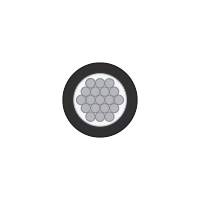
Best guide on Weatherproof UV resistant outdoor wires-2026


The Lifeline of Solar Infrastructure: A Guide to Weatherproof & UV Resistant Outdoor Wires
When we talk about solar parks or complex external electrical layouts, the conversation usually gravitates toward panel efficiency, inverter capacities, or battery storage. However, there is a silent hero—or a potential single point of failure—buried in the trenches and clipped to the racking: the cabling.
In an outdoor environment, wires aren’t just carrying current; they are surviving a relentless elemental assault. For engineers, project managers, and site owners, choosing the right weatherproof and UV-resistant outdoor wire isn’t just a technical box to check—it’s a long-term financial strategy.
Here is an in-depth look at why specialized outdoor cabling is non-negotiable for modern infrastructure.
1. The Invisible Threat: Why UV Resistance is Not Optional
The sun provides the energy we harvest, but it is also the primary enemy of standard electrical insulation. Traditional PVC insulation, when exposed to direct sunlight, undergoes a process called Photodegradation.
Ultraviolet (UV) radiation breaks down the chemical bonds in the polymer chains of the insulation. Over time, you’ll notice the jacket becoming brittle, changing color, and eventually cracking. Once the jacket cracks, moisture enters, leading to:
- Insulation resistance (IR) failure.
- Short circuits.
- Fire hazards due to arcing.
The Solution: Specialized solar cables (often referred to as PV Wire or H1Z2Z2-K) are engineered with carbon black additives or specific UV-stabilizers. These materials absorb or reflect the UV rays, ensuring the cable remains flexible and intact for its 25-year expected lifespan.
2. Weatherproofing Beyond Just “Rain”
“Weatherproof” is a broad term, but in a professional electrical layout, it implies three specific resistances: moisture, temperature fluctuations, and chemical exposure.
A. Moisture and Water Immersion
Outdoor wires must be rated for wet locations. In many solar parks, cables are laid in conduits that inevitably collect condensation or sit in waterlogged trenches. Look for ratings like THWN-2 or XHHW-2. These indicate that the wire is designed to maintain its electrical properties even when submerged or in high-humidity environments.
B. The Thermal Seesaw
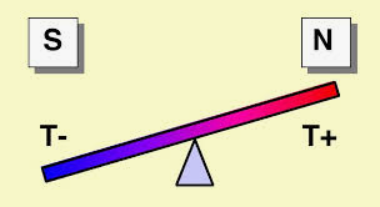
Outdoor cables face extreme temperature swings. In desert solar farms, a cable might face ambient temperatures of 45°C (shifting to much higher internal temperatures under load) and then drop to sub-zero temperatures at night.
- High-End Performance: Quality outdoor wires are often rated for -40°C to +90°C or even 120°C. Cross-linked polyethylene (XLPE) insulation is the industry standard here because it does not melt or flow at high temperatures.
3. Mechanical Integrity: Hardness and Abrasion
External electrical layouts aren’t static. Wind causes cables to vibrate against racking, and thermal expansion causes them to “creep” along surfaces. In some regions, rodents or birds might peck at the lines.
Using a wire with a double-jacketed design provides an extra layer of physical protection. The inner layer provides the electrical insulation, while the outer “sheath” acts as a rugged armor against abrasion and mechanical stress.
4. Technical Standards: What to Look For
When sourcing or specifying wires for a project, “looking sturdy” isn’t enough. You need to verify compliance with international standards to ensure the E-E-A-T (Experience, Expertise, Authoritativeness, and Trustworthiness) of your installation.
| Standard | Application | Key Feature |
| EN 50618 | European Solar Standard | Specifically for H1Z2Z2-K cables; halogen-free and flame retardant. |
| UL 4703 | US Solar Standard | Covers PV Wire requirements for sunlight resistance and burial. |
| IEC 60502-1 | Power Cables | Standard for extruded solid insulated power cables for rated voltages up to 1 kV. |
| TUV Certification | Global Quality | Ensures the cable has been independently tested for outdoor longevity. |
5. Grounding and Voltage Drop
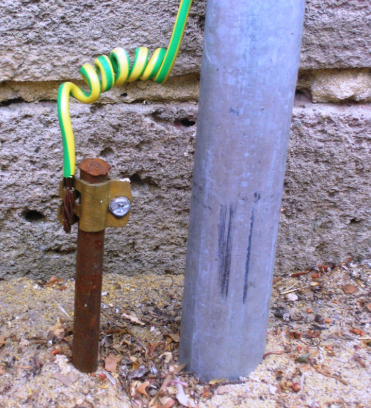
A common mistake in large-scale solar parks is under-specifying the gauge for long-distance runs. Because outdoor layouts often span massive acreage, Voltage Drop becomes a significant factor.
If your wire is too thin, you lose a percentage of the energy generated simply as heat within the wire itself. For a 100MW park, even a 1% increase in voltage drop can equate to thousands of dollars in lost revenue annually. Always calculate your wire size based on the maximum current and the total length of the run, usually aiming for a drop of less than 2-3%.
6. Installation Best Practices for Longevity
Even the best UV-resistant cable will fail if installed poorly.
- Drip Loops: Always create a “U” shape before the cable enters a junction box to ensure water drips off the wire rather than running into the hardware.
- UV-Rated Ties: Never use standard white zip ties for outdoor wires. Use stainless steel clips or black, UV-stabilized nylon ties.
- Conduit Clearance: If using conduits, ensure they are ventilated or sized correctly to prevent “heat stacking,” which can de-rate the cable’s ampacity.
Summary: The Cost of Quality vs. The Price of Failure
Choosing cheap, non-UV rated wire for an outdoor project is a “pay now or pay much more later” scenario. The labor cost of replacing failed cabling in a live solar park is often 5x to 10x the cost of the original material.
By investing in XLPE-insulated, UV-stabilized, and moisture-resistant cabling, you ensure that your energy infrastructure remains productive, safe, and compliant for decades to come.
