





7/52 2-Core Silver Cable Price in Pakistan (2026 Best WAPDA Guide)


7/52 2-Core Silver Cable Price in Pakistan for WAPDA Connection
If you are setting up a new electricity meter or upgrading your home’s main power line, you have likely been told to buy a 7/52 2-core silver cable. In Pakistan, this specific wire—often referred to by local electricians as the standard “WAPDA service cable” or “Aluminium main taar”—is the lifeline connecting the nearest electricity pole to your home’s energy meter.
With fluctuating metal rates and inflation, keeping track of electrical material costs can be tough. In this comprehensive guide, we will break down the current 7/52 2-core silver cable price in Pakistan, why it is the go-to choice for WAPDA connections, and how to spot a high-quality cable so you don’t get ripped off by local vendors.
What is a 7/52 2-Core Silver Cable?
Before diving into the prices, let’s understand what these numbers actually mean. Understanding this prevents local shopkeepers from selling you sub-standard or undersized alternatives.
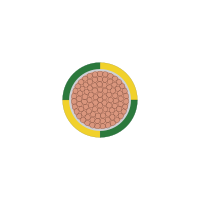
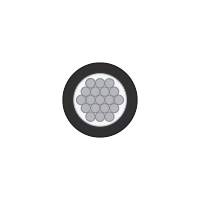
- 7/52 Gauge: This means the cable contains 7 individual strands of wire, and each strand has a thickness of 0.052 inches. In modern electrical terms, this is roughly equivalent to a 10 mm² cable cross-section.
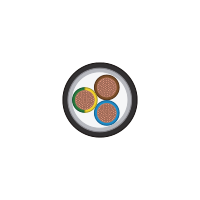
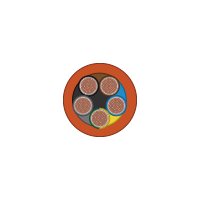
- 2-Core: The cable houses two separate insulated wires bundled inside a tough outer protective jacket. One core carries the Live (Phase) current, while the other serves as the Neutral line.
- Silver (Aluminium): While copper is the ultimate king of conductivity, WAPDA specifically mandates or allows 99.9% pure aluminium (locally called silver) cables for the outdoor drop from the pole to the meter. It is incredibly cost-effective and lightweight, making it perfect for long, overhead spans.
7/52 2-Core Silver Cable Price in Pakistan (June 2026)
In Pakistan’s retail market, cables are sold in two ways: per foot/meter for customized lengths, or by the full coil (typically 90 meters / 300 feet).
The price varies depending on the manufacturer’s brand, the purity of the aluminium, and the thickness of the PVC insulation. Below is the average current market price breakdown:
Current Price Table
| Measurement Unit | Price Range (PKR) | Ideal Use Case |
| Per Foot | Rs. 45 – Rs. 65 | Short distances (Pole right outside your house) |
| Per Meter | Rs. 145 – Rs. 210 | Medium distances or small commercial connections |
| Full Coil (90 Meters / ~300 Feet) | Rs. 12,500 – Rs. 15,500 | Standard distance installations and keeping extra margin |
Note: Premium, heavy-duty commercial-grade brands (like Million Supreme, Azmat Cables, or Pakistan Cables equivalents) can push closer to Rs. 16,000 to Rs. 19,000 per full coil depending on the exact weight and gauge certification. Conversely, unbranded local “light-gauge” options might look cheap at Rs. 8,000, but they pose severe fire hazards.
Why WAPDA Prefers 7/52 Silver Cable for New Connections
If you ask a WAPDA lineman why they insist on this cable, they will point out three major practical reasons:
1. Cost Efficiency
Copper is expensive. Pulling 50 to 150 feet of thick copper wire from a transformer pole to a house would cost a fortune. Silver (aluminium) delivers 61% of the conductivity of copper at a mere fraction of the price, making new meter installations affordable for the average citizen.
2. Theft Deterrence
Unfortunately, copper wire theft from outdoor poles remains a reality in many areas. Because silver cables have a very low scrap resale value compared to copper, thieves rarely bother cutting down WAPDA silver service lines.
3. Tensile Strength and Weight
Aluminium is exceptionally lightweight. When a cable hangs in the air across a street, heavy copper wires can sag severely under their own weight, snapping during high winds or monsoon storms. A 7/52 silver cable handles the physical tension easily without putting excessive strain on your house hook or the utility pole.
Factors Affecting the Cable Price in Pakistan
When you step into markets like Shah Alam Market (Lahore), Bilal Gunj, or Saddar (Karachi), you will notice price differences between shops. This happens because of a few hidden factors:
- Purity of the Conductor: Standard high-grade cables use 99.9% EC-grade (Electrical Conductor) aluminium. Cheap alternatives mix in lower-grade recycled metals, which increases electrical resistance and causes your voltage to drop.
- PVC Insulation Quality: The black outer layer must withstand extreme Pakistani summers (up to 50°C) and heavy monsoon rains. Premium brands use UV-stabilized, flame-retardant PVC, which costs a bit more but prevents short circuits.
- Full Gauge vs. Light Gauge: This is where many buyers get tricked. A “full gauge” wire strictly adheres to the 7/52 dimensions. A “light gauge” or “commercial gauge” wire is secretly shaved down to 7/44 or 7/36 strength but sold under the 7/52 label. Always ask for a Guaranteed Full Gauge cable.
How to Choose the Right Cable: An Expert’s Checklist
Buying electrical wiring isn’t like buying groceries; a wrong choice can fry your household appliances or lead to dangerous electrical fires. When buying your WAPDA main line, use this checklist:
- Check the Stamp: Reliable manufacturers print their brand name, cable size (
7/.052"or10mm²), and voltage rating (250/440V) clearly along the jacket of the wire. If the print rubs off easily with your thumb, walk away. - Weigh the Coil: High-quality silver wire has weight to it because of the thick PVC insulation and full metal strands. If a 90-meter coil feels unusually light, the manufacturer has skipped out on metal or insulation thickness.
- Flexibility Test: Bend the wire. High-grade stranded aluminium should be flexible yet firm. If it feels brittle or makes a cracking sound when bent, the metal quality is incredibly low.
Frequently Asked Questions (FAQs)
Can I use 7/29 or 7/44 wire for a WAPDA main connection?
No. 7/29 and 7/44 wires are meant for indoor wiring (like fans, lights, or light plugs). The main power line coming from the pole needs to handle the collective load of your entire house, including ACs and water pumps. Using anything less than 7/52 can cause the wire to melt instantly under load.
What is the maximum load a 7/52 silver cable can handle?
A standard 7/52 2-core silver cable can safely handle a continuous load of up to 35 to 40 Amperes under normal weather conditions. This is perfectly sufficient for a standard single-phase 5kW to 7kW home load (running 2 to 3 Inverter ACs, a refrigerator, and routine household loads simultaneously).
Does WAPDA provide the cable for free with a new connection?
Generally, no. While WAPDA provides the meter itself after you pay the demand notice, the physical service cable from the pole to your house hook must be purchased by the consumer. The WAPDA team will only install and connect it for you.
Final Verdict
Investing in a high-quality 7/52 2-core silver cable ensures that your home receives a stable, fluctuation-free voltage supply directly from the WAPDA grid. While it might be tempting to save Rs. 2,000 by purchasing a local, unbranded wire, the risk of voltage drops, damaged home appliances, and hazardous short circuits simply isn’t worth it.
Stick to reputable local dealers, demand a guaranteed full gauge, and always verify the manufacturer’s stamps before finalizing your purchase.
About the Author

Ahmad Raza Ali is a Digital Marketing Manager and technical content strategist specializing in renewable energy infrastructure and industrial cable specifications. With a deep focus on search engine optimization and E-E-A-T principles, Ahmad bridges the gap between complex electrical engineering standards (IEC/BS) and practical consumer solar applications. He has been working with LifeCables.com and its sister TaxAccountant.pk as an SEO Analyst for long. He is a BBA cont. undergraduate as well with majors in marketing studying at SZABIST ISB.