






Medium Voltage HT Cable RFQ (Request a Quote) – Best 2026 Guide


Medium Voltage (HT) Cable RFQ: A Procurement & Engineering Guide
Procuring electrical infrastructure materials for utility grids, renewable energy farms, or industrial manufacturing plants is a high-stakes task. When you are dealing with Medium Voltage (MV) and High Tension (HT) cables, a generic inquiry simply will not work. A vague request leads to delayed quotations, misunderstood specifications, and potentially catastrophic misapplications on-site.
Whether you are an electrical engineer designing a 33 kV substation or a procurement manager overseeing a multi-million-dollar EPC project, submitting a precise, highly detailed Request for Quote (RFQ) is the single best way to secure accurate pricing, factory lead times, and uncompromised quality.
In this comprehensive guide, we break down everything you need to include in your MV and HT cable RFQ to get fast, transparent, and exact custom quotes from top-tier manufacturers.
Why Precision Matters in Medium Voltage Cable Procurement
Medium voltage and high tension cables—typically operating from 3.3 kV up to 33 kV (and extending into extra-high voltage applications)—form the backbone of power transmission and distribution. Unlike low-voltage building wires, MV and HT cables require strict adherence to international manufacturing standards, rigorous dielectric testing, and exact structural configurations.
When you issue an RFQ without complete technical parameters, manufacturers must make assumptions or pause the quotation process to request clarifications. In fast-moving industrial supply chains, these back-and-forth emails can stall project timelines by weeks. Furthermore, because MV/HT cable pricing is heavily tied to daily metal market fluctuations (London Metal Exchange (LME) rates for copper and aluminum), having locked-in, exact specifications ensures your cost estimates remain rock-solid.
Core Technical Parameters: What to Include in Your RFQ
To ensure your custom quote request is processed instantly by our technical sales and engineering teams, your RFQ should clearly outline the following parameters:
1. Voltage Grade and System Requirements
Specify the operating voltage clearly using standard designations:
- Rated Voltage ($U_0 / U$): For instance, $6/10\text{ kV}$, $8.7/15\text{ kV}$, or $18/30\text{ (36) kV}$.
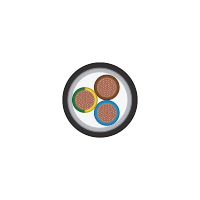
- System Configuration: Is it a three-core or single-core system? State whether the system is solidly grounded, impedance-grounded, or ungrounded, as this dictates insulation thickness and shielding requirements.
2. Conductor Material and Construction
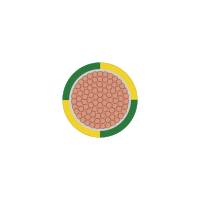
- Material: Annealed electrolytic copper or Electrical Grade (EC) aluminum. Copper offers superior conductivity and flexibility, while aluminum provides a cost-effective, lightweight alternative for long runs.
- Class & Shape: Specify whether you require stranded circular compacted conductors (Class 2) to reduce overall diameter and electrical losses.
- Cross-Sectional Area: Ranging from standard sizes like $50\text{ mm}^2$ up to $630\text{ mm}^2$ or larger based on your load calculations.
3. Insulation and Screening Architecture
MV and HT cables rely heavily on multi-layered extrusion to manage electrical stress:
- Insulation Material: Cross-Linked Polyethylene (XLPE) is the global industry standard due to its excellent thermal stability and high dielectric strength.
- Metallic Screen: Specify the preferred screen configuration—such as copper wire screen, copper tape screen, or a combination—which ensures fault current capacity and electromagnetic shielding.
4. Armoring and Outer Sheathing
The physical environment dictates how the cable is armored and protected from mechanical damage or environmental degradation:
- Armoring: Galvanized Steel Wire Armor (SWA) for multi-core cables, or Aluminum Wire Armor (AWA) for single-core magnetic isolation. Steel Tape Armor (STA) is another frequent choice for direct burial.
- Outer Sheath: Standard PVC (Polyvinyl Chloride), heavy-duty HDPE (High-Density Polyethylene) for rugged underground trenching, or LSZH (Low Smoke Zero Halogen) compounds for indoor, tunnel, or high-occupancy industrial installations.
5. Applicable International Standards
Always reference the governing manufacturing and testing standard your project demands. Common benchmarks include:
- IEC 60502-2: Power cables with extruded insulation and their accessories for rated voltages from $1\text{ kV}$ up to $30\text{ kV}$.
- BS 6622 / BS 7835: British standards for armored power cables.
- IEEE / ICEA standards for regional North American or international compliance.
Step-by-Step Checklist for Submitting Your Custom Quote
When you are ready to send your RFQ to a manufacturer or distributor, structure your submission using this clean checklist:
- Project Overview: Briefly state the application (e.g., underground distribution network, solar farm interconnection, industrial plant expansion).
- Itemized Schedule: Provide a table listing the cable type, core count, conductor size, voltage rating, and required drum lengths.
- Estimated Quantities: Total meterage needed (including contingency margins for pulling and termination waste).
- Delivery Timeline & Destination: Port of destination or site location, along with your required delivery window.
- Documentation Requirements: Specify if you need Factory Acceptance Test (FAT) certificates, Type Test reports from accredited laboratories, or Certificate of Analysis (CoA) with your shipment.
Frequently Asked Questions (FAQs)
1. What is the typical lead time for custom manufactured Medium Voltage cables?
Standard manufacturing lead times for custom MV and HT cables generally range from 3 to 6 weeks, depending on raw material availability (such as LME-priced copper/aluminum), factory production schedules, and specialized testing requirements. Stock items or standard configurations may ship much faster.
2. Why is XLPE preferred over PVC for High Tension applications?
XLPE (Cross-Linked Polyethylene) offers superior thermal resistance, allowing higher continuous conductor operating temperatures ($90^\circ\text{C}$ vs. $70^\circ\text{C}$ for PVC) and a higher short-circuit rating. It also possesses exceptional dielectric properties, making it vastly superior for high-stress medium and high-tension environments.
3. Can I request third-party inspection for my cable batch?
Yes. For critical utility and infrastructure projects, we routinely facilitate third-party inspections by globally recognized agencies (such as SGS, Bureau Veritas, or TÜV) prior to dispatch, ensuring 100% compliance with your project specifications.
4. How do raw material price fluctuations affect my MV cable quote?
Because high-tension cables utilize substantial quantities of high-purity copper or aluminum, quotations are typically valid for a limited window (usually 48 to 72 hours) reflecting live LME metal indices. Locking in your order quickly secures your unit pricing against market volatility.
About the Author

Ahmad Raza Ali is a Digital Marketing Manager and technical content strategist specializing in renewable energy infrastructure and industrial cable specifications. With a deep focus on search engine optimization and E-E-A-T principles, Ahmad bridges the gap between complex electrical engineering standards (IEC/BS) and practical consumer solar applications. He has been working with LifeCables.com; its sister company TaxAccountant.pk and MechaFuze an SEO Executive for long. He is a BBA cont. undergraduate as well with majors in marketing studying at SZABIST ISB.
