




IEC 60502-1 (Power Cables)-A Comprehensive Blog


Here’s a comprehensive blog on IEC 60502-1 (Power Cables) — useful for engineers, procurement teams, specification writers, and installation professionals alike.
🔌 Understanding IEC 60502-1: Power Cables with Extruded Insulation
IEC 60502-1 is an international standard published by the International Electrotechnical Commission (IEC) that defines the requirements for medium-voltage power cables with extruded solid insulation — primarily for fixed installations in distribution networks and industrial plants. (IEC Webstore)
Today, the most relevant edition is IEC 60502-1:2021 (with a Redline version available for comparison with previous editions). (IEC Webstore)
📌 What Does IEC 60502-1 Cover?
IEC 60502-1 applies to power cables with extruded insulation rated:
- 1 kV (Um = 1.2 kV) and
- 3 kV (Um = 3.6 kV)
It includes cables for fixed installations such as:
- Utility distribution networks
- Industrial electrical systems
- Underground and indoor cabling
👉 These cables are not intended for special services like submarines, overhead lines, mining applications, nuclear containment, or shipboard networks. (IEC Webstore)
🧱 Core Components and Construction
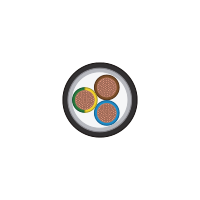
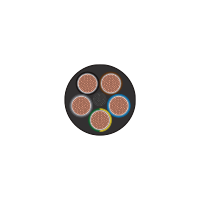
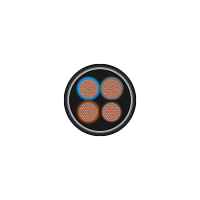
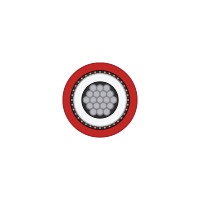
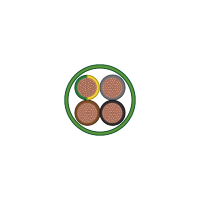
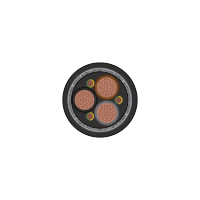
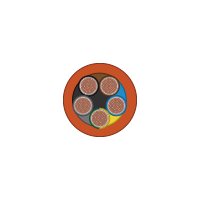
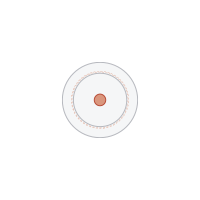
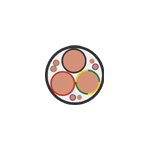
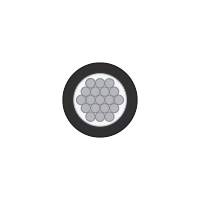
IEC 60502-1 specifies how a cable must be built so it functions safely and reliably. The main components include:
1. Conductors
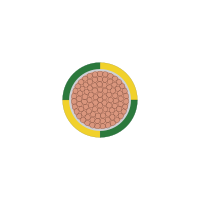
- Made of copper or aluminium
- Can be solid or stranded
- Must meet conductivity & mechanical criteria (e.g., Class 1, Class 2, Class 5 in IEC 60228). (Tratos Group)
2. Insulation
- Extruded solid insulation such as:
- XLPE (Cross-Linked Polyethylene)
- EPR / HEPR (Ethylene Propylene Rubber)
- Thickness and dimensions are defined to handle voltage and stresses. (iTeh Standards)
3. Metallic Screens
- Optional but required for screened cables
- Provide grounding and fault paths
- Detailed construction rules are part of the standard. (iTeh Standards)
4. Inner Coverings and Fillers
- Provide mechanical stability and core separation
- Specified per conductor count and cable size. (iTeh Standards)
5. Sheaths and Outer Protection
- Protect against moisture, chemical hazards, and mechanical damage
- Materials include PVC, PE, or halogen-free compounds
- Fire performance requirements may apply. (iTeh Standards)
🧪 Testing Requirements
IEC 60502-1 mandates a detailed test regime that ensures performance and safety:
Routine Tests
Done on every manufactured cable length:
- Electrical resistance of conductors
- High-voltage dielectric test — applied voltage for insulation verification
- Example: 2.5× rated voltage + 2 kV for AC tests; DC alternatives defined. (studylib.net)
Sample and Type Tests
Performed on representative samples:
- Insulation resistance tests
- Partial discharge tests
- Temperature and bending tests
- Sheath integrity and physical checks (iec-equipment.com)
These ensure the cable will last and perform safely under real service conditions.
⚡ Rated Voltages and System Use
IEC 60502-1 cables are primarily intended for AC systems at 1 kV and 3 kV. (EVS)
However — and this is important — cables designed for 1 kV AC can also be used in DC distribution systems with manufacturer declaration, subject to voltage limits: (IEC Webstore)
- ≤ 750 V DC (max 900 V) between live and neutral/earth
- ≤ 1500 V DC (max 1800 V) between live conductors
👉 Core colours for DC use must meet local regulations.
📏 Dimensions, Construction and Materials
IEC 60502-1 provides detailed tables showing:
- Conductor cross-section ranges
- Insulation thickness for each voltage rating
- Minimum sheath thickness
- Outer diameter limits
These are critical when selecting cables to ensure they fit glands, trays, conduits, and joint kits. (iTeh Standards)
🛠️ Installation and Service Considerations
The standard focuses on fixed installations — installations that are not regularly moved or flexed. Flexible or mobile power cables fall outside this standard. (IEC Webstore)
Cable designers, installers, and specifiers must also consider:
- Ambient temperature
- Method of laying (buried, tray, conduit)
- Short-circuit rating
- Mechanical protection
- Fire and smoke performance (e.g., low-smoke zero halogen)
Many applications enhance IEC 60502-1 by adding region-specific fire ratings or environmental performance criteria.
📈 Why IEC 60502-1 Matters
1. Safety
It ensures cables withstand electrical, mechanical, and environmental stresses without posing hazards. (iec-equipment.com)
2. Interoperability
Standardised dimensions and tests mean cables and accessories (joints, terminations) fit and work together.
3. Reliability
Compliance reduces failures and outages in power distribution systems. (iec-equipment.com)
4. Global Acceptance
IEC standards form the basis for many regional and national cable standards, including EN, BS, and others. (Tratos Group)
📘 Summary
| Aspect | IEC 60502-1 Focus |
|---|---|
| Standard Type | International Power Cable Standard |
| Voltage Ratings | 1 kV & 3 kV AC (fixed installations) |
| Cable Type | Extruded insulation power cables |
| Key Requirements | Construction, materials, dimensions, tests |
| Key Benefits | Safety, reliability, compatibility |
For such informative blogs, click here Life Cables Blogs.