












ACSR Conductors-2026 Comprehensive Blog

ACSR Conductors: Strengthening Modern Power Transmission Systems
In the world of electrical power transmission, ACSR conductors play a vital role in delivering electricity efficiently over long distances. As global energy demand continues to rise, utilities and transmission companies rely on robust and cost-effective conductors to ensure reliability and safety. ACSR (Aluminum Conductor Steel Reinforced) conductors have become one of the most widely used overhead transmission conductors due to their excellent mechanical strength, conductivity, and durability.
This blog explores what ACSR conductors are, their construction, advantages, applications, and why they remain a preferred choice in modern power transmission systems.
What Are ACSR Conductors?
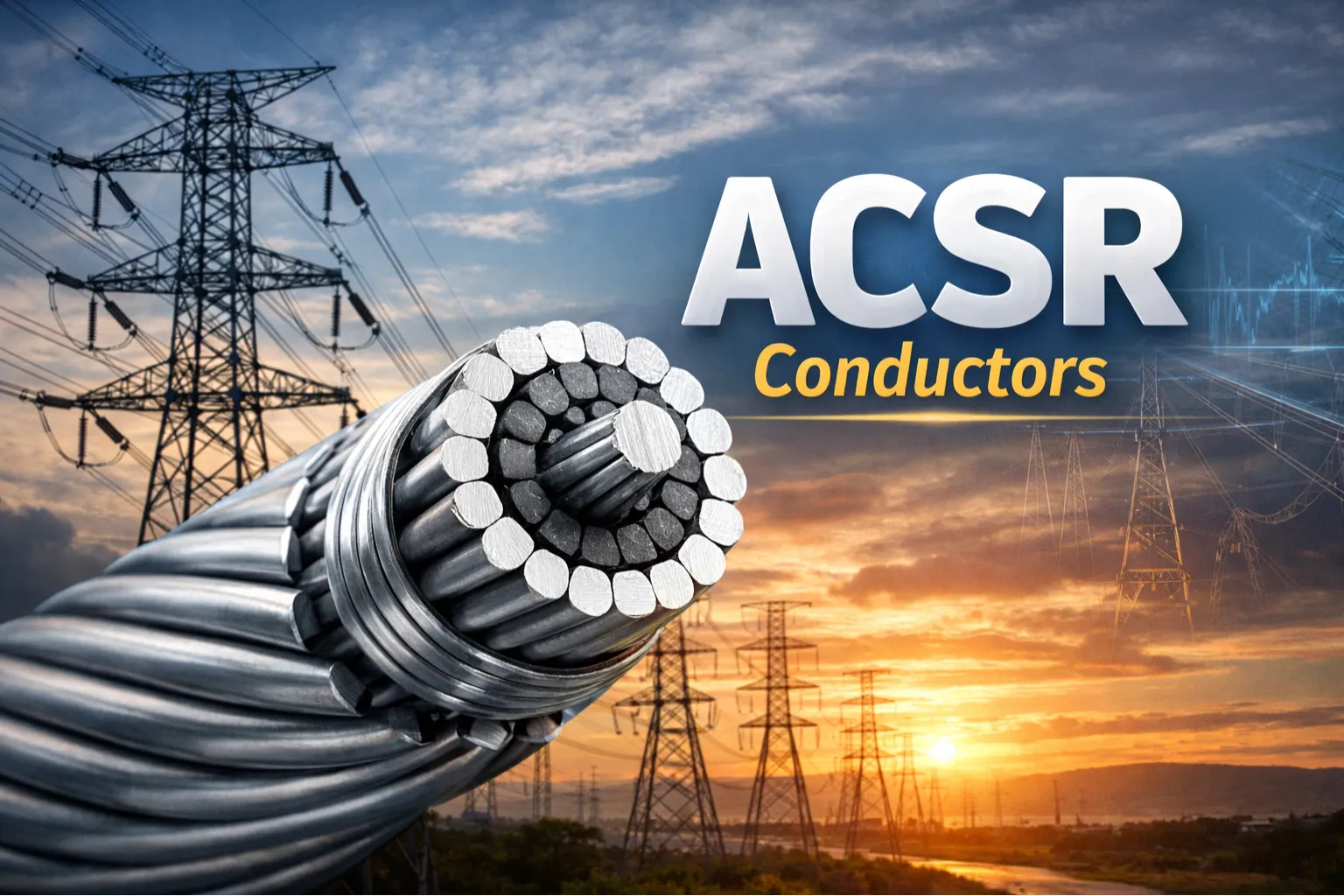
ACSR conductors are composite conductors made by combining aluminum strands with a steel core. The aluminum strands, placed around the steel core, are responsible for carrying the electrical current, while the steel core provides the mechanical strength required to withstand tension, wind loads, and ice accumulation.
This unique construction allows ACSR conductors to offer a balanced combination of high electrical conductivity and superior tensile strength, making them ideal for overhead transmission and distribution lines.
Construction of ACSR Conductors
The structure of an ACSR conductor typically consists of:
- Outer aluminum strands: Usually made of hard-drawn aluminum for excellent conductivity and lightweight properties.
- Central steel core: Made of galvanized steel wires that enhance mechanical strength and reduce sag over long spans.
The number of aluminum and steel strands varies depending on the conductor size and application. For example, common strand configurations include 6/1, 26/7, or 54/7, where the first number represents aluminum strands and the second represents steel strands.
Key Advantages of ACSR Conductors
ACSR conductors offer several advantages that make them a preferred solution for power transmission networks:
1. High Mechanical Strength
The steel core provides exceptional tensile strength, allowing ACSR conductors to span long distances without excessive sag. This makes them suitable for river crossings, valleys, and mountainous regions.
2. Excellent Conductivity
Aluminum is an excellent conductor of electricity. By using aluminum for current carrying, ACSR conductors ensure efficient power transmission with reduced energy losses.
3. Cost-Effective Solution
Compared to copper conductors, ACSR conductors are significantly more economical while delivering comparable performance for overhead lines.
4. Lightweight Design
Aluminum’s low density makes ACSR conductors lighter than pure copper conductors, reducing the load on transmission towers and support structures.
5. Durability and Long Service Life
With proper galvanization of the steel core, ACSR conductors offer strong resistance to corrosion and environmental stress, resulting in long operational life.
Applications of ACSR Conductors
Due to their strength and efficiency, ACSR conductors are widely used in various power transmission applications, including:
- High-voltage overhead transmission lines
- Medium and low-voltage distribution networks
- Long-span river and valley crossings
- Rural and urban electrification projects
- Grid expansion and infrastructure upgrades
In countries with expanding power grids, such as Pakistan and other developing economies, ACSR conductors remain a backbone of transmission infrastructure due to their affordability and reliability.
Comparison with Other Conductors
While several conductor types exist, ACSR stands out when compared to alternatives:
- AAC (All Aluminum Conductor): AAC offers better conductivity but lacks the mechanical strength required for long spans.
- AAAC (All Aluminum Alloy Conductor): AAAC provides better corrosion resistance but is generally more expensive.
- ACSR: Offers the best balance of strength, conductivity, and cost, especially for long-distance transmission.
This balance makes ACSR conductors particularly suitable for regions with challenging terrains and climatic conditions.
Standards and Specifications
ACSR conductors are manufactured according to international and regional standards such as:
- ASTM B232
- IEC 61089
- BS 215
- IS 398 (India)
These standards define conductor dimensions, strand composition, tensile strength, and electrical characteristics to ensure safety and performance consistency.
Installation and Maintenance Considerations
Proper installation is essential to maximize the performance of ACSR conductors. Factors such as sag-tension calculations, environmental loading, and conductor spacing must be carefully considered. Regular inspections help identify issues like corrosion, broken strands, or excessive sag, ensuring uninterrupted power supply and system reliability.
Future of ACSR Conductors
Despite the emergence of advanced conductors like HTLS (High-Temperature Low-Sag), ACSR conductors continue to dominate conventional transmission networks. Their proven track record, ease of installation, and cost advantages ensure they remain relevant, especially in developing regions and standard grid applications.
Conclusion
ACSR conductors are a cornerstone of modern electrical transmission systems. By combining aluminum’s excellent conductivity with steel’s mechanical strength, they deliver a reliable, durable, and economical solution for overhead power lines. From national grids to rural electrification projects, ACSR conductors continue to power communities and industries worldwide.
As energy infrastructure expands and modernizes, ACSR conductors will remain a trusted choice for utilities seeking performance, longevity, and value.
To read such blogs, visit Life Cables Blogs.