





🔌Power Cables-2026 Comprehensive Blog

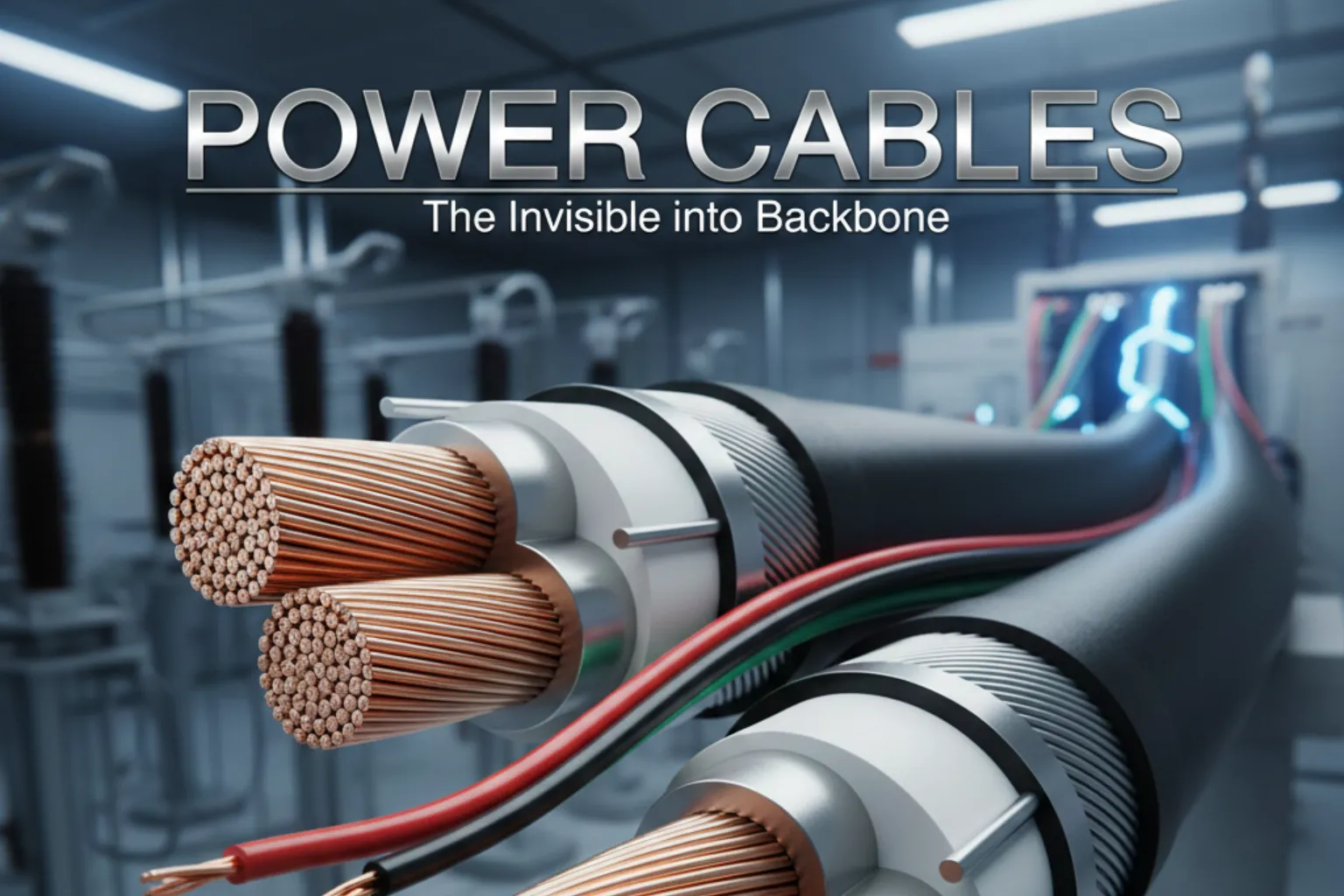
The Invisible Backbone: A Deep Dive into Power Cables
In our modern, electrified world, we often take for granted the constant flow of energy that powers our homes, businesses, and critical infrastructure. But behind every flip of a switch, there lies an unsung hero: the power cable. More than just insulated wires, power cables are the essential, invisible backbone of the entire electrical grid, reliably and safely transmitting electrical energy from generation points to consumption centres.
Understanding power cables—their types, components, and applications—is crucial for electricians, engineers, and anyone involved in maintaining the complex web of our global power system. This comprehensive guide will illuminate the world of power cables, helping you understand how they work and why choosing the right cable is critical for efficiency, safety, and longevity in any electrical installation.
What Exactly is a Power Cable?
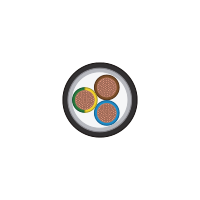
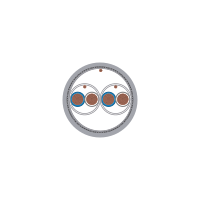
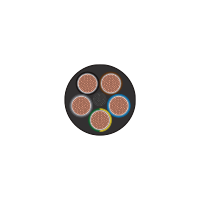
A power cable is an assembly of one or more insulated electrical conductors, held together with an overall protective jacket. Its primary function is to efficiently conduct electrical energy with minimal losses and maximum safety.
At a fundamental level, every power cable is engineered to handle three main things:
- Conduction: The core materials (usually copper or aluminum) must be highly conductive to carry the electrical current (Amperes).
- Insulation: The material surrounding the conductor must be a high-quality dielectric to contain the voltage (Volts) and prevent shorts or leakage.
- Protection: The outer layers must provide mechanical strength, weather resistance, and protection against chemical or environmental damage.
Anatomy of a Power Cable: Key Components
While specific designs vary greatly, most power cables share a core set of components:
1. The Conductor (The Carrier)
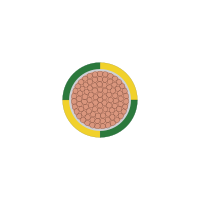
The conductor is the heart of the cable, carrying the current.
- Copper: Highly conductive, flexible, and strong. Excellent choice for most applications, especially those requiring smaller gauges or high performance.
- Aluminum: Lighter and less expensive than copper. Often used in larger-sized conductors and high-voltage transmission lines due to its weight advantage and cost-effectiveness.
Conductors can be solid (for small wires) or stranded (composed of numerous fine wires twisted together for flexibility).
2. Insulation (The Protector)
Insulation surrounds the conductor and is vital for safety, preventing current from escaping and ensuring the cable can withstand the operating voltage. Common insulating materials include:
- PVC (Polyvinyl Chloride): Cost-effective, good general-purpose insulation for low-voltage applications.
- XLPE (Cross-Linked Polyethylene): Excellent thermal stability, superior dielectric strength, and widely used for medium- and high-voltage power cables due to its long life and resistance to treeing (electrical degradation).
- EPR (Ethylene Propylene Rubber): Known for its flexibility and excellent resistance to heat and moisture.
3. Sheathing and Jacketing (The Shield)
The outer layer is the first line of defense against the external environment. It protects the core components from moisture, abrasion, sunlight (UV), chemicals, and mechanical stress. Materials like PVC, PE (Polyethylene), and specialized flame-retardant compounds are frequently used.
4. Armour (The Extra Defence)
For cables installed in harsh environments, buried directly, or subjected to heavy mechanical stress (like in mining or oil & gas), a layer of steel wire or steel tape armor is added. This provides exceptional crush and impact protection, safeguarding the electrical integrity of the cable.
⚡ Classifying Power Cables: Voltage Levels and Applications
Power cables are broadly categorized based on the voltage they are designed to handle. Choosing the correct voltage rating is non-negotiable for safe operation and equipment protection.
| Category | Voltage Range | Typical Applications | SEO Keywords |
| Low Voltage (LV) | Up to 1 kV (1,000 V) | Residential wiring, commercial lighting, small motors, appliances, control circuits. | low voltage cable, THHN wire, building wire, feeder cable |
| Medium Voltage (MV) | 1 kV to 35 kV | Primary distribution within cities, large industrial plants, wind/solar farm collection systems, campus power distribution. | medium voltage power cable, MV 15kV cable, shielded power cable, primary distribution |
| High Voltage (HV) | 35 kV to 230 kV | Main transmission lines connecting substations, inter-city power transmission. | high voltage transmission line, HV cable, bulk power transfer |
| Extra High Voltage (EHV) | Above 230 kV | Long-distance, high-capacity power transmission between regions or countries. | EHV cable, ultra-high voltage, national grid connection |
The Crucial Role of Cable Selection
The performance and reliability of any electrical system hinge on proper cable selection. A cable must be rated for the operating voltage and insulated for the environment. However, the most critical factor is Ampacity.
Ampacity is the maximum current a conductor can continuously carry without exceeding its temperature rating. This is directly affected by:
- Conductor Size (Gauge): Larger conductors have higher ampacity.
- Insulation Type: Insulation with higher temperature ratings (e.g., XLPE) can handle more current for the same conductor size.
- Installation Method: Cables installed in air dissipate heat better than those bundled in conduit or buried underground.
Choosing a cable with insufficient ampacity will cause overheating, leading to insulation degradation, energy loss, and a severe fire hazard.
Future-Proofing with Quality Power Cables
The global demand for electricity is rising, driven by renewable energy integration (solar and wind farms), the growth of electric vehicles (EVs), and smart grid technologies. This transition requires power cables that are more robust, efficient, and smarter than ever before.
Investing in high-quality, properly rated power cables from reputable cable manufacturers is not just a cost—it’s an investment in safety, operational efficiency, and minimized downtime. Whether you are planning a residential remodel, designing an industrial facility, or engineering a multi-million dollar solar farm, remember that the reliability of your entire system begins and ends with the invisible backbone: the power cable.
For such informative blogs, visit Life Cables Blogs.