

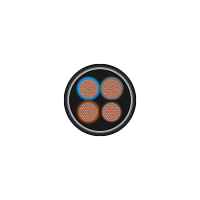
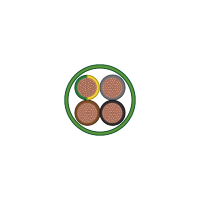
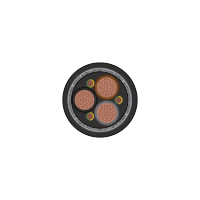


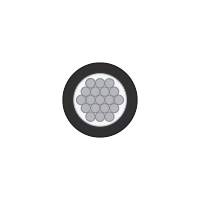
IEC 60502-1 Power Cables: The Backbone of Industrial Distribution in Pakistan (2026 Guide)


Are you wandering around in searching about IEC 60502-1 Power Cables
In 2026, Pakistan’s industrial landscape is undergoing a massive transformation. With the recent deregulation of the electricity market and the rapid integration of industrial solar and battery storage systems, the demand for reliable infrastructure has never been higher. Whether you are managing a textile mill in Faisalabad or a new tech hub in Islamabad, the “veins and arteries” of your facility are your power cables.
When it comes to low-voltage (LV) distribution, IEC 60502-1 is the gold standard. But why is this specific international certification so critical for Pakistani industries today? In this guide, we’ll break down the technicalities of IEC 60502-1 compliant cables and why they are the smartest investment for your business.
What is IEC 60502-1?
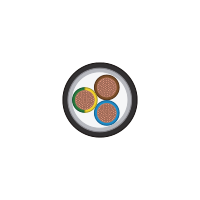
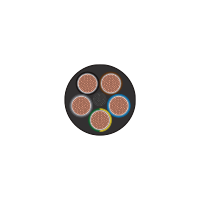
The International Electrotechnical Commission (IEC) 60502-1 standard specifies the construction, dimensions, and test requirements for power cables with extruded solid insulation. Specifically, Part 1 covers cables with rated voltages of 1 kV (1000V) and 3 kV.
These are the workhorses of industrial plants, used for fixed installations in:
- Main power distribution boards.
- Industrial control circuits.
- Underground energy networks.
- Cable ducting and outdoor layouts.
Core Components: What Makes a High-Quality Cable?
To survive the extreme temperatures of a Lahore summer or the humidity of Karachi, an IEC 60502-1 cable must be built with precision. Here is what you should look for:
1. The Conductor (Copper vs. Aluminum)
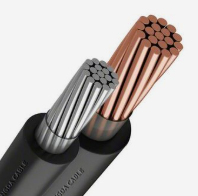
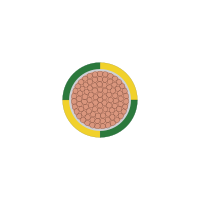
While Aluminum is cost-effective for long-distance transmission, Annealed Copper (Class 1 or 2) is the preferred choice for industrial distribution. According to IEC 60228 (the companion standard for conductors), high-purity copper ensures minimum resistance and prevents the overheating that often leads to factory fires.
2. XLPE Insulation: The Game Changer
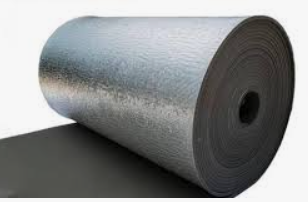
Most high-quality IEC 60502-1 cables in Pakistan now use XLPE (Cross-linked Polyethylene) instead of standard PVC.
- Thermal Performance: XLPE can handle conductor temperatures up to 90°C during normal operation and 250°C during a short circuit.
- Durability: It offers superior resistance to chemicals and moisture, which is vital for cables buried in Pakistan’s varying soil conditions.
3. Armouring for Mechanical Protection
In industrial environments, cables are often subjected to mechanical stress. IEC 60502-1 cables usually come in two protected varieties:
- SWA (Steel Wire Armour): Provides high pulling tension and protection against impact.
- STA (Steel Tape Armour): Excellent for protecting against rodent damage (a common issue in local warehouses).
Why IEC 60502-1 Compliance Matters in Pakistan
1. Energy Efficiency & Cost Savings
With the 2026 shift toward “Net Billing” and deregulated electricity auctions, every unit of energy counts. Substandard cables cause “Voltage Drop.” If your cable isn’t sized correctly or doesn’t meet IEC standards, you are essentially paying for electricity that turns into wasted heat before it even reaches your machinery.
2. Safety and Fire Prevention
Industrial fire incidents in Pakistan are frequently linked to “short circuits” caused by poor insulation. IEC 60502-1 cables are tested for flame retardancy. Using LSZH (Low Smoke Zero Halogen) variants ensures that in the event of a fire, toxic fumes are minimized, protecting both your workforce and expensive electronic controllers.
3. Compliance with NEPRA and International Audits
If your industry exports goods to Europe or the US, your facility’s safety standards are often audited. Using IEC-certified cabling proves that your infrastructure meets global safety benchmarks.
Key Specifications for Procurement
When requesting quotes from manufacturers like Fast Cables, Pakistan Cables, or Newage, ensure you specify the following parameters based on the IEC 60502-1 standard:
| Feature | Requirement |
| Voltage Rating | 0.6/1 (1.2) kV |
| Conductor Material | Plain Annealed Copper (IEC 60228) |
| Insulation Type | XLPE (90°C Rated) |
| Outer Sheath | PVC Type ST2 or LSZH |
| Testing | Must pass Routine, Sample, and Type tests as per IEC 60502-1 |
Selecting the Right Manufacturer in Pakistan
Pakistan is home to several world-class manufacturers that strictly adhere to IEC standards. When choosing a supplier, look for:
- In-house Testing Labs: Do they have the equipment to perform the “High Voltage Test” and “Insulation Resistance Test” required by the IEC?
- Third-Party Certifications: Look for endorsements from bodies like KEMA or local recognition by the PSQCA (Pakistan Standards and Quality Control Authority).
- Track Record: Top-tier brands like Coppergat and MCI have decades of experience in the local climate, ensuring their “High-Quality” claim isn’t just marketing.
Final Verdict
Investing in high-quality IEC 60502-1 compliant power cables is no longer an option—it’s a strategic necessity. As Pakistan moves toward a more competitive and automated industrial era, the reliability of your power distribution system will determine your operational uptime and safety.
Don’t cut corners on the “invisible” part of your factory. Choose cables that meet international standards to ensure a legacy of safety and efficiency.