






Do Gold-Plated HDMI Cables really improve picture quality on 8K TVs?


Do Premium Gold-Plated HDMI Cables Actually Matter for Your 8K TV? Let’s know the Truth
If you’ve recently dropped a significant chunk of change on a stunning 8K TV, you’ve likely faced “The Upsell.” You’re at the checkout counter (or scrolling through Amazon), and there it is: a Gold-Plated, Diamond-Braided, Oxygen-Free Copper HDMI 2.1 cable priced at $80.
The marketing claims are bold. They promise “deeper blacks,” “shimmering highlights,” and “unmatched signal purity.” But as someone who has spent years calibrating home theaters and untangling the “spaghetti” behind AV racks, I’m here to tell you: The physics of digital data doesn’t care about the jewelry on your connectors.
1. The “Digital Cliff” vs. The Analog Myth
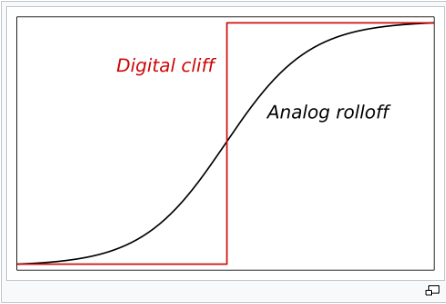
To understand why gold plating is mostly a gimmick, we have to look at how signal transmission has changed.
In the old days of analog (VGA or Component cables), the signal was a continuous wave. If the cable was cheap, that wave would degrade, resulting in “snow” or ghosting. In that world, better materials actually could slightly improve the image.
HDMI is digital. It sends data in 1s and 0s using a protocol called TMDS (Transition Minimized Differential Signaling).
In the digital world, you encounter the “Digital Cliff.” * On the plateau: The cable is high-quality enough to deliver the bits. The picture is perfect.
- Off the cliff: The cable cannot handle the bandwidth. You get “sparkles” (stray white pixels), the screen goes black, or the image flickers.
There is no middle ground. A $100 cable cannot make a 1 is “more of a 1” than a $10 cable. If the data arrives, the picture is identical.
2. So, Why Is There Gold on the Plug?
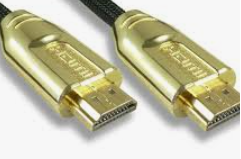
If gold doesn’t make the colors pop, why do manufacturers use it? There is a legitimate, albeit boring, engineering reason: Corrosion resistance.
Gold is a highly unreactive metal. Unlike Silver or Copper, it won’t oxidize (tarnish) over time. If you live in a high-humidity environment or near the ocean where salt air is a factor, gold-plated connectors can prevent the physical plug from rusting into the port.
The Reality Check:
- Conductivity: Copper and silver are actually better conductors than gold.
- The Connection: Most TV HDMI ports are nickel-plated. When you plug a gold connector into a nickel port, you aren’t gaining a “purer” signal; you’re just preventing the plug from getting crusty in ten years.
3. What Actually Matters for 8K: Bandwidth
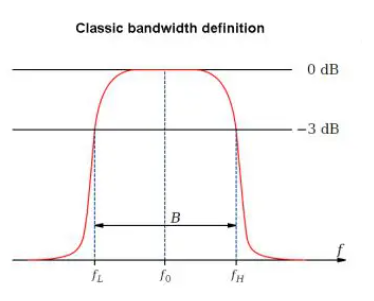
If you take one thing away from this article, let it be this: Focus on the “Ultra High Speed” certification, not the metal plating.
8K resolution requires a massive jump in data. To run 8K at 60Hz (or 4K at 120Hz for PS5/Xbox Series X gamers), your cable needs to handle 48Gbps (Gigabits per second).
The HDMI 2.1 Standard
To ensure your 8K TV actually performs, you need a cable labeled Ultra High Speed HDMI. These cables are tested to ensure they support:
- Dynamic HDR: Frame-by-frame color optimization.
- eARC: For uncompressed Dolby Atmos audio.
- VRR (Variable Refresh Rate): Critical for smooth gaming.
A $15 cable with an “Ultra High Speed” certification sticker will outperform a $200 “Gold-Plated” cable that is only rated for HDMI 2.0.
4. When Should You Actually Spend More?
I’m not saying you should buy the absolute cheapest cable at the dollar store. There are three scenarios where spending a bit more is a smart “Expert” move:
- Build Quality (The Physicality): If you are someone who constantly plugs and unplugs devices, a cable with reinforced “strain relief” (where the wire meets the plug) is worth an extra $5.
- Long Runs (The 15+ Foot Rule): Standard copper HDMI cables struggle to maintain 48Gbps over long distances. If your 8K TV is across the room from your receiver, you need an Active Optical HDMI Cable (AOC). These use fiber optics to carry the signal and are worth the premium.
- In-Wall Ratings: If you’re running cables behind drywall, you must buy cables with a CL3 rating for fire safety. This has nothing to do with picture quality and everything to do with not burning your house down.
5. The Verdict: Save Your Money for Content
After years of testing and side-by-side comparisons in controlled environments, the conclusion is clear: Gold-plated HDMI cables do not improve 8K picture quality. The “richer colors” and “sharper details” promised by high-end cable marketing are usually a placebo effect. If your current cable isn’t flickering or cutting out, it’s doing its job perfectly.
My Advice: Buy a certified Ultra High Speed cable from a reputable brand like Monoprice, Anker, or even AmazonBasics. Use the $70 you saved to buy a 4K/8K Ultra HD Blu-ray—that actually will make your TV look better.