










What is Current Carrying Capacity-2026 Latest

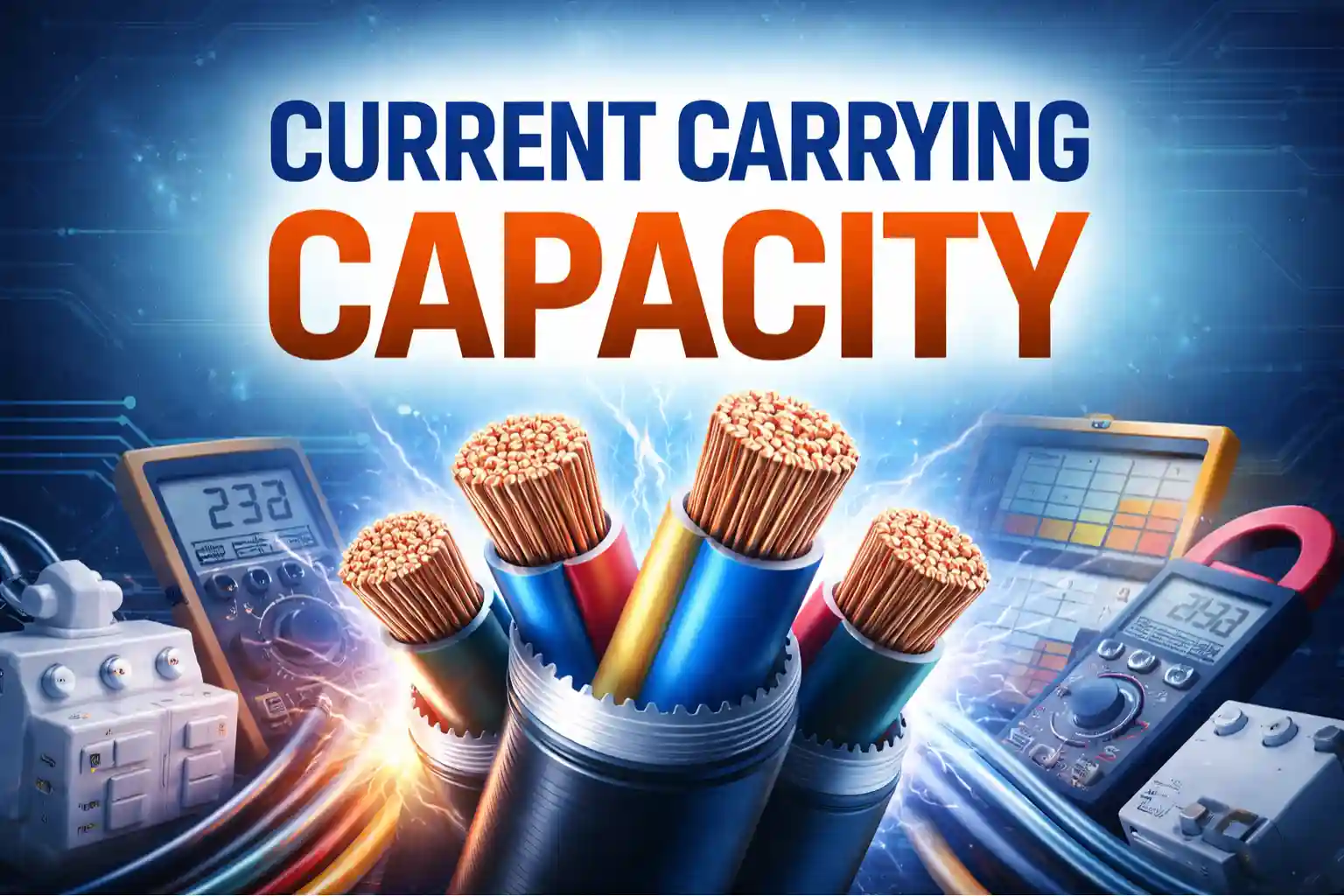
Current Carrying Capacity: A Complete Guide for Electrical Systems
Current Carrying Capacity is one of the most critical parameters in electrical and power system design. Whether you are selecting electrical cables, designing industrial installations, or planning power distribution networks, understanding current carrying capacity ensures safety, efficiency, and long-term reliability.
In this comprehensive guide, we will explain what current carrying capacity is, the factors affecting it, relevant standards, calculation methods, and why it is essential for modern electrical installations.
What Is Current Carrying Capacity?
Current carrying capacity, also known as ampacity, refers to the maximum amount of electric current a conductor can safely carry without exceeding its permissible temperature limit. If a conductor carries current beyond this limit, excessive heat is generated, which can damage insulation, reduce lifespan, or cause fire hazards.
Ampacity is typically expressed in amperes (A) and depends on conductor material, size, insulation type, and installation conditions.
Why Current Carrying Capacity Is Important
Selecting the correct current carrying capacity is essential for several reasons:
- Prevents overheating and insulation failure
- Reduces fire and short-circuit risks
- Ensures compliance with electrical standards
- Improves system efficiency and longevity
- Minimizes voltage drop and power losses
Improper cable sizing is one of the leading causes of electrical failures in residential, commercial, and industrial systems.
Factors Affecting Current Carrying Capacity
Several variables influence how much current a conductor can safely carry:
1. Conductor Material
The most commonly used conductor materials are:
- Copper – High conductivity, higher current capacity, compact size
- Aluminum – Lightweight, cost-effective, lower conductivity than copper
Copper conductors can carry more current than aluminum conductors of the same cross-sectional area.
2. Conductor Size (Cross-Sectional Area)
Larger conductor sizes have lower resistance and can carry higher current levels. Conductor size is usually measured in:
- mm² (metric system)
- AWG (American Wire Gauge)
As conductor size increases, resistance decreases, allowing higher current flow with less heat generation.
3. Insulation Type
Insulation materials have different temperature ratings, which directly affect ampacity:
- PVC – Typically rated up to 70°C
- XLPE – Rated up to 90°C or higher
- LSZH – Enhanced fire safety, varying thermal limits
Higher temperature-rated insulation allows higher current carrying capacity.
4. Ambient Temperature
Ambient temperature significantly impacts current carrying capacity. Higher surrounding temperatures reduce the conductor’s ability to dissipate heat, lowering allowable current.
De-rating factors are applied when ambient temperature exceeds standard reference values (usually 30°C).
5. Installation Method
How the cable is installed plays a major role:
- In air
- Buried underground
- In conduits or trunking
- On cable trays
Cables installed in free air dissipate heat better than those enclosed in conduits or bundled with other cables.
6. Grouping and Bundling
When multiple cables are grouped together, heat accumulation occurs. This reduces current carrying capacity and requires grouping derating factors to be applied.
Current Carrying Capacity Standards
International and regional standards provide ampacity tables and calculation methods, including:
- IEC 60287 – Calculation of current rating
- IEC 60502 – Power cables
- NEC (NFPA 70) – North American electrical code
- BS 7671 – UK wiring regulations
- PSQCA & PEC– Pakistan electrical standards
Using standardized ampacity tables ensures compliance and safety across installations.
How to Calculate Current Carrying Capacity
1. Using Standard Ampacity Tables
The most common method is referencing manufacturer or standard tables that list current ratings based on:
- Cable size
- Insulation type
- Installation condition
- Ambient temperature
This approach is quick and reliable for most applications.
2. Analytical Calculation (IEC Method)
For complex installations, current carrying capacity is calculated by balancing:
- Heat generated by electrical losses
- Heat dissipated to the environment
This method considers thermal resistance, conductor temperature rise, and environmental conditions.
3. Applying Derating Factors
When conditions differ from standard assumptions, derating factors must be applied for:
- High ambient temperature
- Grouped cables
- Different installation methods
- Altitude effects
Final ampacity = Rated ampacity × Derating factors
Relationship Between Current Carrying Capacity and Voltage Drop
While ampacity ensures thermal safety, voltage drop ensures performance efficiency. A conductor may safely carry current but still cause excessive voltage drop over long distances.
Therefore, proper cable selection considers both:
- Current carrying capacity
- Allowable voltage drop limits
Ignoring either factor can result in inefficient or unsafe systems.
Current Carrying Capacity in Different Applications
Residential Wiring
- Lower current levels
- Shorter cable runs
- PVC-insulated copper conductors commonly used
Commercial Buildings
- Mixed loads
- Grouped cables
- Fire-rated and LSZH cables often required
Industrial Installations
- High current loads
- Harsh environments
- XLPE insulated and armored cables preferred
Power Transmission & Distribution
- Large conductor sizes
- Aluminum conductors widely used
- Thermal and environmental calculations critical
Common Mistakes to Avoid
- Selecting cable size based only on current load
- Ignoring ambient temperature effects
- Overlooking cable grouping derating
- Using incorrect insulation ratings
- Not complying with local electrical standards
Avoiding these mistakes improves system safety and reduces maintenance costs.
Future Trends in Current Carrying Capacity
Advancements in materials and design are improving ampacity performance:
- High-temperature insulation compounds
- Compact conductors with improved heat dissipation
- Smart cables with thermal monitoring
- Enhanced standards for renewable energy systems
These developments allow higher current densities while maintaining safety.
Conclusion
Current carrying capacity is a fundamental concept in electrical engineering that directly impacts safety, efficiency, and compliance. Understanding the factors affecting ampacity, applying correct standards, and using proper calculation methods ensures reliable and long-lasting electrical systems.
Whether you are designing residential wiring, industrial power networks, or high-voltage transmission systems, selecting the correct current carrying capacity is not optional—it is essential.