



BS 5467 SWA Cables Guide: Heavy-Duty Power for Underground Networks

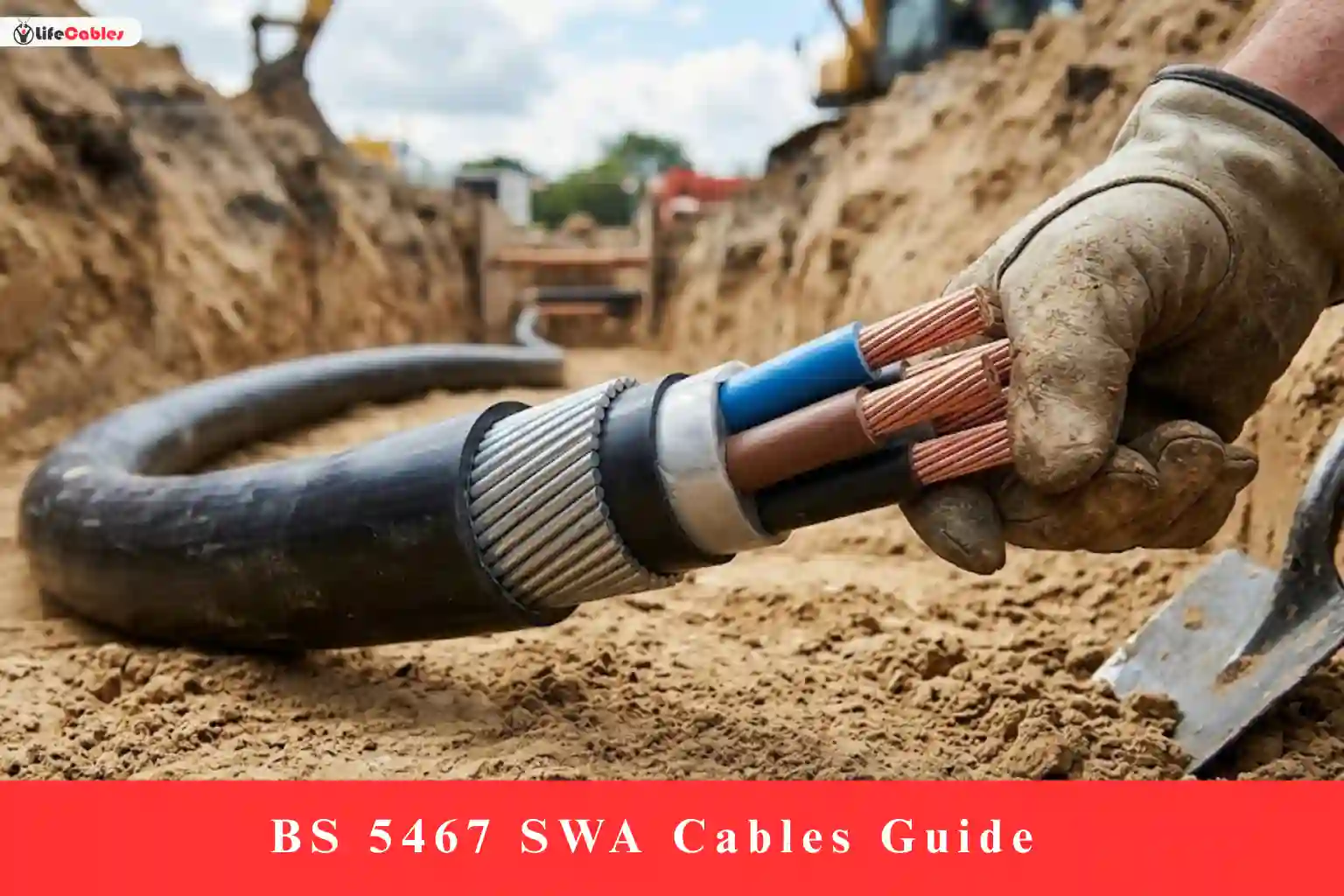
The Backbone of the Grid: A Deep Dive into BS 5467 Steel Wire Armoured (SWA) Cables
If you’ve ever walked past a construction site or peered into a deep trench during a municipal power upgrade, you’ve likely seen it: a thick, black, rugged cable that looks like it could survive an apocalypse. In the industry, we know this as BS 5467 SWA cables (Steel Wire Armoured cables).
While it might not be the most “glamorous” topic in electrical engineering, it is arguably one of the most critical. BS 5467 cables are the heavy lifters of the UK’s power infrastructure. From industrial workshops to underground utility networks, these cables ensure that high-voltage power gets from point A to point B without being crushed, corroded, or cut.
In this guide, we’re going to break down everything you need to know about BS 5467 SWA cables—from their unique construction to why they remain the gold standard for underground power.
What Exactly is BS 5467?
To understand the cable, you have to understand the standard. BS 5467 is a British Standard that specifies the requirements for low-voltage (LV) armoured cables. Specifically, these are cables with thermosetting insulation (usually XLPE) and a voltage rating of $600/1000V$.
The “armour” part isn’t just a marketing term. These cables are designed to withstand significant mechanical stress. Whether they are buried directly in the ground, clipped to the side of a bridge, or pulled through concrete ducts, they are built to endure environments where a standard PVC cable would fail within days.
Anatomy of a Heavy-Duty BS 5467 SWA Cables
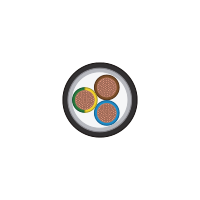
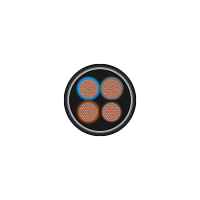
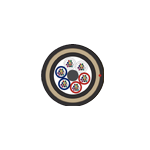
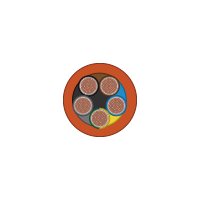
What makes the BS 5467 so resilient? It’s all in the layers. If you were to take a cross-section of a 4-core SWA cable, here is what you would find:

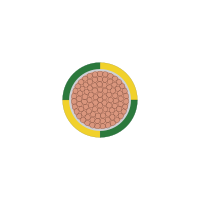
- Conductor: Usually Plain Annealed Stranded Copper (Class 2). Copper is the preferred choice for its superior conductivity and flexibility compared to aluminum in these specific LV applications.
- Insulation (XLPE): Cross-linked Polyethylene (XLPE) is a game-changer. Unlike standard PVC insulation, XLPE can handle higher operating temperatures—up to 90°C. This means the cable can carry more current for its size.
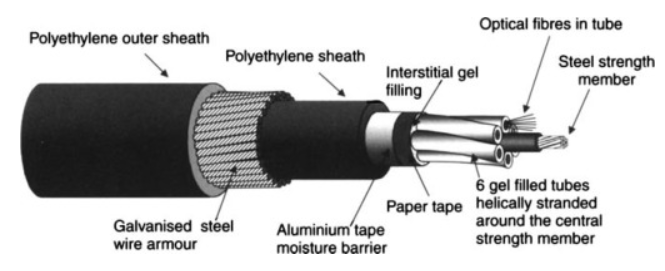
- Bedding (PVC): This layer acts as a cushioned boundary between the delicate insulated cores and the hard metal armour. It keeps everything tight and protected from internal friction.
- Armour (Steel Wire): This is the “SWA” part. A layer of galvanized steel wires is wrapped helically around the bedding. This provides incredible tensile strength and protection against “impact” (like a stray shovel hit).
- Outer Sheath (PVC): The final layer is typically a heavy-duty, UV-resistant black PVC. It’s designed to be tough, water-resistant, and flame-retardant.
Why Use BS 5467 for Underground Networks?
When it comes to underground power networks, the challenges are three-fold: Moisture, Mechanical Pressure, and Rodents.
1. Mechanical Protection
Soil moves. Ground settles. Sometimes, heavy machinery drives over the spot where a cable is buried. The steel wire armour acts as a “cage,” absorbing the pressure and protecting the internal copper conductors from being pinched or severed.
2. The “Earth” Factor
In many electrical installations, the steel armour itself can serve as a Circuit Protective Conductor (CPC) or “earth.” While many engineers prefer to use a dedicated core for earthing, the SWA provides an additional layer of safety and a path for fault currents.
3. Chemical and Biological Resistance
The PVC outer sheath of a BS 5467 cable is specifically formulated to resist the chemicals often found in soil, as well as the nibbling of rats or squirrels, who find unarmoured cables surprisingly tasty.
Technical Specifications: What the Pros Look For
If you are specifying these cables for a project, you need to look beyond the “SWA” label. Here are the technical benchmarks that define a high-quality BS 5467 cable:
- Voltage Rating: $0.6/1 kV$ (600V to the ground, 1000V between conductors).
- Temperature Range: $-15°C$ to $+90°C$.
- Minimum Bending Radius: Usually 8x the overall diameter for circular conductors. This is crucial for planning trench layouts.
- Core Identification:
- 2-Core: Brown, Blue
- 3-Core: Brown, Black, Grey
- 4-Core: Brown, Black, Grey, Blue
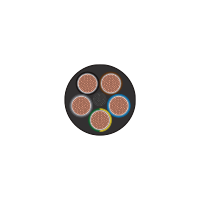
- 5-Core: Brown, Black, Grey, Blue, Green/Yellow
Pro Tip: Always check the “Current Carrying Capacity” tables (often found in the IET Wiring Regulations) before purchasing. Factors like “ground thermal resistivity” and “depth of burial” will change how much power your cable can safely handle.
Common Installation Mistakes to Avoid
Even the toughest cable can fail if installed poorly. Having consulted on numerous industrial sites, I’ve seen these three mistakes more than any others:
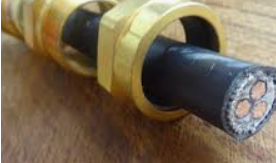

- Poor Glanding: The “gland” is the fitting that connects the cable to the junction box. If you don’t use a proper BW or CW brass gland, you lose the earth continuity of the armour and leave the cable vulnerable to moisture ingress.
- Ignoring Bend Radius: SWA is stiff. If you force it into a sharp 90-degree turn, you can stress the XLPE insulation inside, leading to “hot spots” and eventual cable failure.
- Depth Issues: For underground networks, cables should typically be buried at a depth of 450mm to 600mm, topped with “Caution: Electric Cable” marker tape. Burying them too shallow is a recipe for disaster during future landscaping.
The Verdict: Is BS 5467 Right for You?
If your project involves outdoor power, underground runs, or industrial environments where cables might be kicked, crushed, or exposed to the elements, BS 5467 SWA is the undisputed champion. It balances cost-effectiveness with extreme durability.
While LSF (Low Smoke and Fume) alternatives like BS 6724 exist for indoor public spaces (where smoke is a hazard), for the raw, rugged requirements of an underground power network, the BS 5467 remains the industry’s “Old Reliable.”