

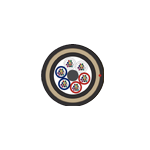
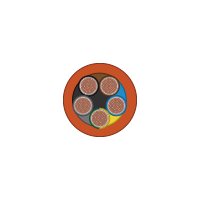


Anti-Termite & Anti-Rodent Jackets: The Ultimate Rural Guide


The Invisible Threat Underground: Why Anti-Termite & Anti-Rodent Jackets Are Essential for Rural Power
In the quiet stretches of agricultural land and the expanding infrastructure of rural areas, a silent war is being waged beneath the soil. While engineers focus on voltage drops and load distribution, nature has its own plans. Termites and rodents—often dismissed as mere nuisances—are actually among the leading causes of premature cable failure in outdoor installations.
For anyone managing an agricultural project or a rural utility grid, the choice of cabling isn’t just about electrical conductivity; it’s about survival against biological interference. Standard PVC or PE jackets are often treated by nature as either a snack or an obstacle to be gnawed through. This is where Anti-Termite and Anti-Rodent (ATAR) cable jackets become the unsung heroes of long-term infrastructure reliability.
The Biological Challenge: Why Standard Cables Fail
To understand why specialized jackets are necessary, we have to look at the “why” behind the damage.
1. The Rodent Factor
Contrary to popular belief, rodents like rats and squirrels don’t usually eat cable jackets because they are hungry. They gnaw because their incisors never stop growing. To keep these teeth sharp and at a manageable length, they must chew on hard substances. The smooth, rounded surface of a buried cable provides the perfect “grinding stone.” Once the jacket is breached, moisture enters, the armor corrodes, and a short circuit is inevitable.
2. The Termite Factor
Termites are a different kind of threat. In rural and agricultural settings, subterranean termites are attracted to the heat generated by energized cables. While they don’t digest the plastic, they use their powerful mandibles to cut through anything standing between them and a moisture source or a potential nesting site.
Engineering the Defense: How ATAR Jackets Work
Designing a cable jacket that can withstand biological attacks while remaining environmentally safe for agricultural land is a delicate balancing act. There are generally three primary methods used to create these protective layers:
Chemical Repellents (The Aversive Approach)
The most common method involves incorporating specialized additives into the outer sheath (usually HDPE or PVC). These additives are non-toxic but have an incredibly bitter taste (such as Denatonium Benzoate) or a “hot” sensation (like synthetic Capsaicin). When a rodent attempts to gnaw, the intense sensory discomfort forces them to stop immediately before reaching the internal conductors.
Physical Barriers (The Hardness Approach)
Termites have a specific “biting force.” By increasing the surface hardness of the jacket or using high-density materials, manufacturers can make the cable too difficult for the termite to penetrate. Some high-end ATAR cables use a thin nylon or polyamide (PA) skin over the main jacket. Nylon is exceptionally smooth and hard, making it nearly impossible for termites to get a “grip” with their mandibles.
Chemical Toxicity (The Traditional Approach)
In the past, heavy pesticides like Lindane were used. However, in today’s environmentally conscious landscape—especially in agriculture where soil health is paramount—these have been phased out in favor of compliant, non-leaking additives that meet REACH and RoHS standards.
Why Rural and Agricultural Installations Need This Most
In a city, a cable fault might be identified and repaired within hours. In a rural or agricultural setting, the stakes are much higher:
- Accessibility: Buried cables in large farm tracts are difficult to locate and excavate. A single rodent bite can lead to days of downtime for irrigation pumps or livestock ventilation systems.
- Soil Conditions: Agricultural soil is often disturbed by tilling and enriched with organic matter, which increases biological activity. Termite colonies thrive in these environments.
- The Cost of Replacement: The cost of the cable itself is often only 20% of the total project cost; the other 80% is the labor, trenching, and downtime. Investing in an ATAR jacket is essentially a low-cost insurance policy against a high-cost failure.
Technical Standards to Look For: IEC 60502-1 and Beyond
When sourcing these cables, it isn’t enough to just take a supplier’s word for it. Look for cables that have undergone rigorous biological testing.
- Termite Resistance Testing: This usually involves burying cable samples in a high-density termite mound for several months and checking for “pitting” or “scarring.”
- Rodent Resistance Testing: This is often done in controlled environments where rodents are given the choice between food and gnawing on the cable.
- Material Compliance: Ensure the jacket maintains its mechanical properties (tensile strength and elongation) even with the added chemicals.
Environmental Impact: Is it Safe for the Soil?
A major concern for farmers is whether the “anti-pest” chemicals will leach into the ground and affect crops or groundwater. Modern ATAR cables use non-migratory additives. These are chemically bonded to the plastic polymer, meaning they don’t “leak” out into the environment. They only interact with the pest upon physical contact/biting.
Summary: A Proactive Approach to Rural Connectivity
As we push for smarter farms and more robust rural grids, the physical layer of our infrastructure must be as resilient as the digital layer. Choosing a cable with an Anti-Termite and Anti-Rodent jacket is a hallmark of professional engineering. It shows an understanding of the local environment and a commitment to sustainability—because the most sustainable cable is the one you never have to replace.
Whether you are installing solar arrays in a remote field or running power to a new processing plant, don’t let a 2-inch rodent bring down your multi-million rupee investment. Protect your lines from the ground up.