








AAC Conductors-2026 Comprehensive Blog

Introduction to AAC Conductors
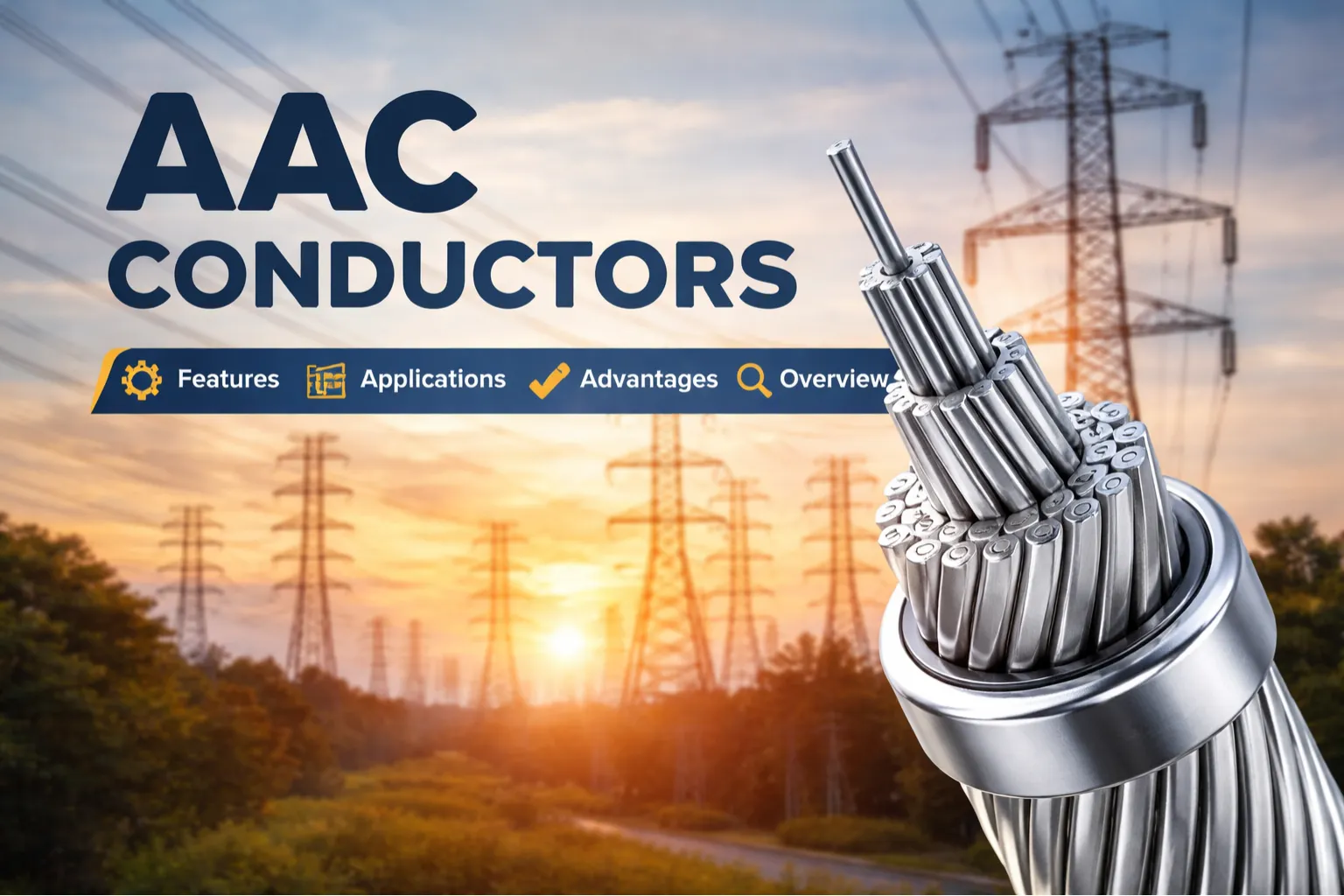
AAC Conductors, short for All Aluminium Conductors, are widely used in electrical power transmission and distribution systems, especially in urban and short-span networks. Made entirely of high-purity aluminum strands, AAC conductors are valued for their excellent electrical conductivity, lightweight nature, and corrosion resistance. Due to these properties, they are commonly deployed where high conductivity and flexibility are more important than mechanical strength.
This blog explores AAC conductors in detail, covering their construction, characteristics, advantages, applications, and comparison with other overhead conductors.
What Are AAC Conductors?
AAC conductors consist of concentric layers of aluminum wires stranded together to form a conductor. Typically manufactured using EC-grade aluminum (Electrical Conductor grade), these conductors offer conductivity close to 61% IACS (International Annealed Copper Standard).
Unlike ACSR (Aluminum Conductor Steel Reinforced), AAC conductors do not have a steel core. As a result, they are lighter and more flexible, making them ideal for installations requiring frequent handling or where structural load needs to be minimized.
Construction of AAC Conductors
The construction of AAC conductors is relatively simple:
- Made entirely of aluminum strands
- Strands are arranged concentrically around a central wire
- Available in single-layer or multi-layer stranding
- Manufactured in accordance with international standards such as ASTM, IEC, and BS
The absence of a steel core means AAC conductors have a uniform current distribution, reducing electrical losses and improving overall efficiency.
Key Features of AAC Conductors
AAC conductors possess several notable features that make them suitable for specific power transmission needs:
1. High Electrical Conductivity
Aluminum offers excellent conductivity, making AAC conductors highly efficient for power transmission over short distances.
2. Lightweight
AAC conductors are significantly lighter than copper and steel-reinforced conductors, reducing tower and pole loading.
3. Corrosion Resistance
Aluminum naturally forms an oxide layer that protects it from corrosion, making AAC conductors suitable for coastal and humid environments.
4. Flexibility
Their flexible nature simplifies installation and reduces mechanical stress during handling.
5. Cost-Effective
AAC conductors are more economical than copper conductors while offering acceptable performance for many applications.
Applications of AAC Conductors
AAC conductors are best suited for short-span and urban distribution networks where mechanical strength is not the primary requirement. Common applications include:
- Urban overhead power distribution
- Substation bus bars
- Coastal transmission lines
- Industrial power networks
- Railway electrification systems
- Low to medium voltage distribution lines
Due to their lower tensile strength, AAC conductors are generally not recommended for long-span or high-tension transmission lines.
Advantages of AAC Conductors
AAC conductors offer multiple benefits that make them a preferred choice in many electrical systems:
- Improved current-carrying capacity due to uniform aluminum composition
- Reduced line losses compared to mixed-material conductors
- Ease of installation due to flexibility and low weight
- Lower maintenance requirements
- Excellent performance in corrosive environments
These advantages make AAC conductors particularly useful in densely populated cities and coastal regions.
Thermal Behavior and Sag Characteristics
Under operating conditions, AAC conductors exhibit predictable thermal expansion. As temperature rises, aluminum expands, which can result in increased sag compared to steel-reinforced conductors. However, in short-span installations such as urban distribution lines and substations, this sag remains within permissible limits. Proper design and tensioning ensure safe operation even during peak load conditions.
Installation and Maintenance Benefits
Due to their lightweight and flexible structure, AAC conductors are easy to transport, handle, and install. This reduces installation time and labor costs, particularly in congested urban areas. Additionally, AAC conductors require minimal maintenance because they do not suffer from galvanic corrosion or steel core deterioration, contributing to long-term operational reliability.
Role of AAC Conductors in Modern Power Networks
With the expansion of urban infrastructure and smart grid systems, AAC conductors continue to play an important role in modern power networks. Their compatibility with compact line designs and underground-to-overhead transitions makes them suitable for evolving electrical distribution requirements. Utilities often prefer AAC conductors for city networks where space constraints and aesthetic considerations are important.
Limitations of AAC Conductors
Despite their benefits, AAC conductors have certain limitations:
- Lower mechanical strength compared to ACSR conductors
- Higher sag under high temperatures
- Limited use in long-span transmission lines
Therefore, proper selection based on load, span length, and environmental conditions is essential.
AAC vs ACSR Conductors
Understanding the difference between AAC and ACSR conductors helps in selecting the right conductor for a project:
| Feature | AAC Conductors | ACSR Conductors |
|---|---|---|
| Core Material | Aluminum only | Steel-reinforced |
| Weight | Lightweight | Heavier |
| Conductivity | Higher | Slightly lower |
| Tensile Strength | Lower | Higher |
| Applications | Urban & coastal | Long-span transmission |
AAC conductors excel in conductivity and corrosion resistance, while ACSR conductors perform better in long-distance and high-tension lines.
Standards and Specifications
AAC conductors are manufactured according to recognized international standards, including:
- ASTM B231
- IEC 61089
- BS 215
- DIN and IS standards
These standards ensure quality, safety, and consistency in electrical performance.
Conclusion
AAC conductors play a vital role in modern power distribution systems where efficiency, flexibility, and corrosion resistance are key requirements. Their lightweight structure, high conductivity, and cost-effectiveness make them ideal for urban, industrial, and coastal installations.
While they may not be suitable for long-span or high-tension applications, AAC conductors remain a reliable and widely used solution for short-distance power transmission. Selecting the right conductor based on environmental conditions and load requirements ensures optimal system performance and longevity.
For such informative articles, you can click Life Cables Blogs.