






Difference between 3/29 and 7/29: Which is Best for Your House Wiring?


Choosing the right electrical cable for your home isn’t just a technical decision; it’s a safety decision. If you are currently building a house or renovating an old one, you have likely heard your electrician mention “3/29” and “7/29” cables. While these numbers might sound like a secret code, they are the backbone of your home’s electrical infrastructure.
In this guide, we will break down the differences between 3/29 and 7/29 cables, why one is better for lights and the other for heavy appliances, and how to spot quality in a market flooded with sub-par options.
Difference Between 3/29 and 7/29: Understanding the Terminology:
Before comparing them, let’s simplify the naming convention. In the world of electrical wiring, these numbers refer to the physical construction of the wire:
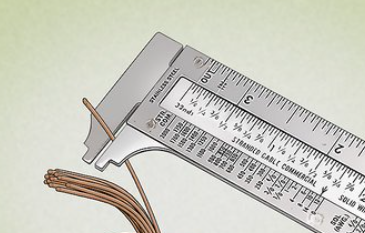
- The First Number (3 or 7): This indicates the number of individual copper strands inside the insulation.
- The Second Number (29): This represents the gauge (thickness) of each individual strand. In this case, 29 SWG (Standard Wire Gauge).
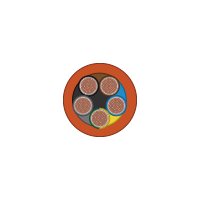
So, a 3/29 cable has three strands of 29-gauge wire twisted together, while a 7/29 cable has seven strands of the same thickness. While they look similar from the outside, their performance and capacity are worlds apart.
3/29 Cable: The Standard for Light Circuits
The 3/29 cable is the most commonly used wire in residential projects. Because it has fewer strands, it is thinner and has a lower current-carrying capacity.
Where to Use 3/29?
This cable is designed for “Light Loads.” It is perfect for:
- LED bulbs and energy savers.
- Ceiling fans.
- Bracket lights and chandeliers.
- Doorbell circuits.
Advantages and Limitations
The primary advantage of 3/29 is its flexibility and cost-effectiveness. It is easier to pull through narrow conduits (pipes) and is significantly cheaper than 7/29. However, you should never use 3/29 for power sockets or heavy machinery. Overloading a 3/29 wire causes it to heat up, which can melt the insulation and lead to a short circuit or fire.
7/29 Cable: The Heavy Lifter
When you move from lighting to power, you need the 7/29 cable. With more strands, the total cross-sectional area of the copper increases, allowing more electrons to flow without resistance.
Where to Use 7/29?
This is the standard choice for “Power Points” and general-purpose sockets. Use it for:
- Wall sockets (where you plug in chargers, TVs, or lamps).
- Juicers and blenders in the kitchen.
- Computers and gaming consoles.
- Small room heaters (though dedicated 4mm or 6mm wires are better for large ACs).
Why 7/29 is Essential
Using 7/29 for your wall sockets provides a “safety buffer.” Even if you plug in a slightly heavier appliance by mistake, the 7/29 cable can handle the load far better than its 3-strand counterpart.
Key Differences at a Glance
| Feature | 3/29 Cable | 7/29 Cable |
| Number of Strands | 3 Strands | 7 Strands |
| Current Capacity | ~5 to 7 Amperes | ~10 to 15 Amperes |
| Primary Use | Lighting and Fans | Sockets and General Power |
| Durability | Moderate | High |
| Price | More Affordable | Higher Cost |
How to Choose Quality Cables
In my years of observing electrical installations and analyzing material standards, I have seen that the “label” on a wire doesn’t always match the “reality” inside. To ensure your home is safe, you must look beyond just the 3/29 or 7/29 branding.
1. Copper Purity (99.9% Oxygen-Free)
The strands must be made of 99.9% pure copper. Impure copper or “mixed” metals increase electrical resistance. This not only increases your electricity bill because of energy loss but also creates dangerous heat. Always look for brands that provide a certificate of purity.
2. Insulation Material (PVC Quality)
The “skin” of the wire is just as important as the copper. High-quality cables use Grade A PVC that is flame-retardant. In the event of a spark, quality insulation will smoke rather than catch fire, giving you precious time to shut off the main breaker.
3. Gauge Accuracy
Some local manufacturers sell “under-gauge” wire. They might label a wire as 29 SWG, but it might actually be thinner (30 or 32 SWG). Always buy from reputable brands that adhere to international standards like BS (British Standards) or IEC (International Electrotechnical Commission).
Professional Tips for Homeowners
If you are currently in the wiring phase, here are a few realistic tips to ensure a smooth project:
- Color Coding is Key: Stick to the standard color codes (usually Red/Yellow/Blue for Phase and Black for Neutral). This makes it infinitely easier for any electrician to perform repairs in the future.
- Don’t Mix Brands: Try to use the same brand of cable throughout the house. Different manufacturers may have slight variations in strand thickness or insulation density.
- The “Weight” Test: If you aren’t sure about the quality, compare the weight of two different brands of the same length. Pure copper is heavy. If a coil feels suspiciously light, it likely contains impurities or less copper.
- Future-Proofing: If you are unsure whether a point will be used for a light or a small appliance, always default to 7/29. It is better to have a wire that is too strong than one that is too weak.
Conclusion: Making the Final Call
Choosing between 3/29 and 7/29 isn’t a matter of “which is better,” but rather “which is right for the job.” Use 3/29 for your ceiling and wall lights to save money and space in your conduits. Use 7/29 for every wall socket to ensure your appliances run cool and your home remains safe.
Electricity is the lifeblood of a modern home, but it must be respected. By choosing high-quality, standardized cables, you aren’t just wiring a building—you are protecting your family.
