



IEC 60332 Guide: Best Flame-Retardant Cables for High-Rise Safety

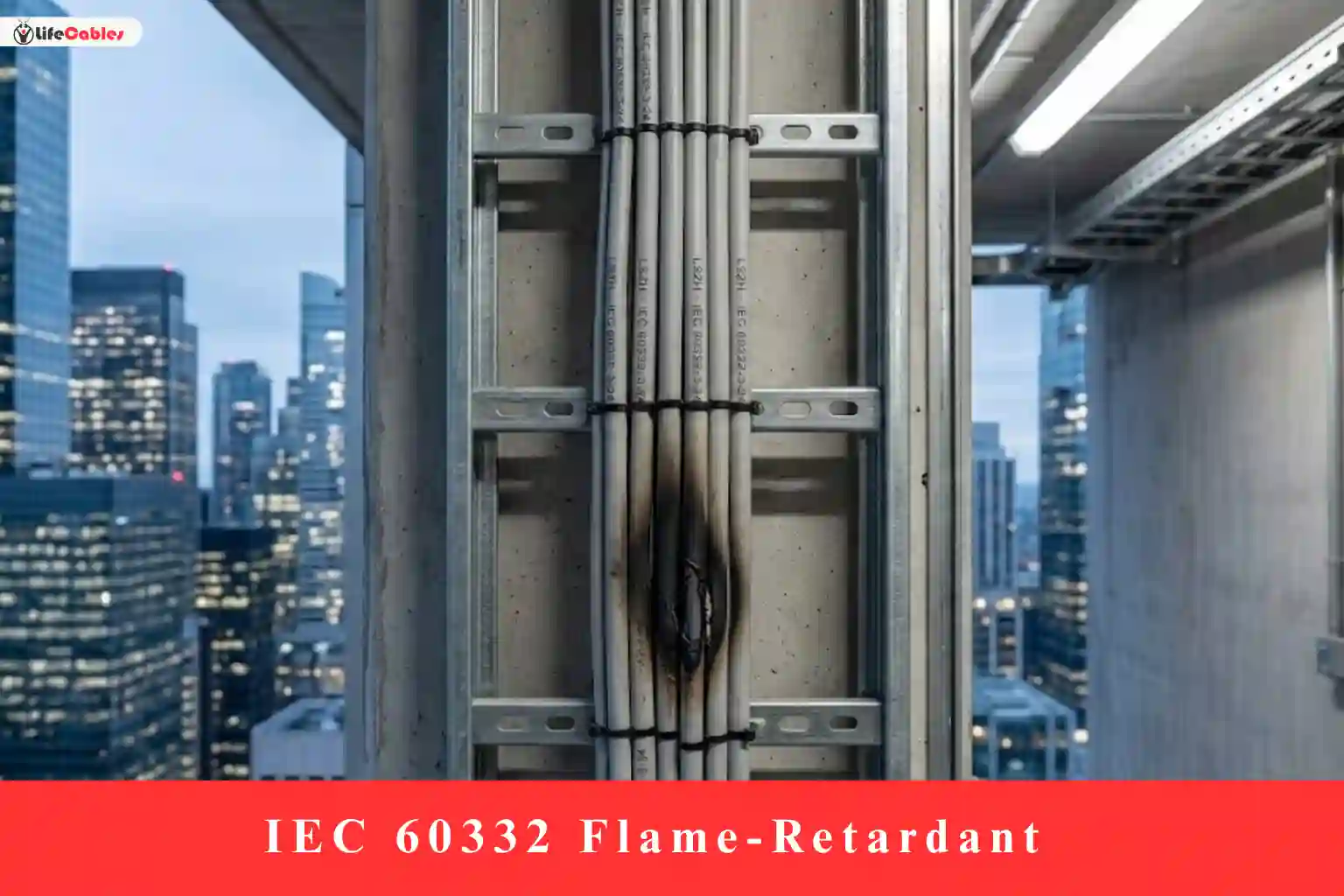
Ensuring fire safety in high-rise buildings is a non-negotiable priority for architects, electrical engineers, and property developers. In 2026, with the Building Safety Act and global urbanization trends pushing structures higher than ever, the choice of cabling can be the difference between a minor incident and a catastrophic disaster.
When we talk about vertical flame spread, the gold standard is IEC 60332. This standard isn’t just a technical footnote; it is a critical safety benchmark designed to prevent cables from acting as “fuses” that carry fire from one floor to another.
In this guide, I will break down the IEC 60332 standards, explain why bundled cable testing (Part 3) is the real hero of high-rise safety, and help you identify the best flame-retardant cables for your next project.
What is the IEC 60332 Standard?
The IEC 60332 series, titled “Tests on electric and optical fibre cables under fire conditions,” defines how a cable behaves when exposed to an external flame. Its primary goal is to measure flame retardancy—the ability of a cable to self-extinguish once the fire source is removed and to limit the distance a flame can travel along its length.
The Two Main Pillars: IEC 60332-1 vs. IEC 60332-3
It is a common mistake to assume all “IEC 60332 compliant” cables are equal. The standard is divided into parts that address very different real-world scenarios:
- IEC 60332-1 (Single Cable Test): This test checks if a single vertical cable can resist a 1 kW flame. While it’s a baseline requirement, it doesn’t account for how cables behave in the dense “bunches” found in high-rise risers.
- IEC 60332-3 (Bundled Cable Test): This is the high-stakes version. It tests cables mounted in bundles on a vertical ladder. Because multiple cables generate more heat and fuel, this is the standard that truly matters for skyscraper safety.
Why High-Rise Buildings Demand IEC 60332-3
In a high-rise building, cables travel through vertical shafts known as risers. If a fire starts in a lower-level electrical room, these vertical bundles can create a “chimney effect,” allowing flames to race upward through the building’s core.
Understanding the Categories (A, B, C, and D)
IEC 60332-3 is further categorized based on the volume of non-metallic (combustible) material per meter.
| Category | Combustible Material | Flame Exposure Time | Common Application |
| Category A | 7.0 Liters/meter | 40 Minutes | Industrial & High-Risk Infrastructure |
| Category B | 3.5 Liters/meter | 40 Minutes | Commercial High-Rise Buildings |
| Category C | 1.5 Liters/meter | 20 Minutes | General Indoor Installations |
For high-rise residential or office towers, IEC 60332-3-24 (Category C) or 3-22 (Category A) are typically specified to ensure that even in dense cable trays, the fire will not spread beyond a height of 2.5 meters from the burner.
Best Flame-Retardant Cables for 2026
Choosing the right cable involves more than just looking for the IEC 60332 stamp. You also need to consider smoke toxicity and acidity. Here are the top performers in the current market:
1. LSZH (Low Smoke Zero Halogen) Power Cables
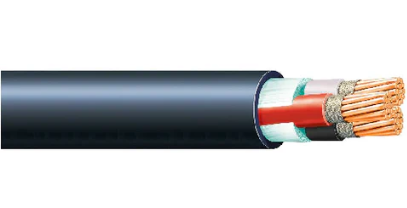
Standard PVC cables release thick, black smoke and toxic hydrochloric acid gas when they burn. In a high-rise evacuation, this smoke is often more deadly than the fire itself.
- Standards: IEC 60332-3-24, IEC 60754-1/2 (Zero Halogen), IEC 61034 (Low Smoke).
- Best For: Main power distribution and sub-mains in residential towers.
2. Mineral Insulated Copper Cable (MICC)
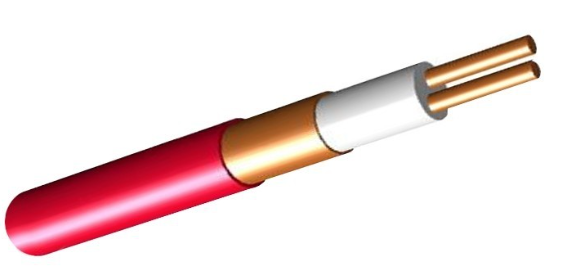
If you need the “Ultimate” in fire safety, MICC is the answer. These cables are essentially inorganic and cannot burn or contribute fuel to a fire.
- Performance: Often exceeds IEC 60332 requirements, achieving IEC 60331 (Fire Resistance) status as well.
- Best For: Emergency lighting, fire pumps, and smoke extraction systems.
3. Armoured Flame Retardant (SWA) Cables
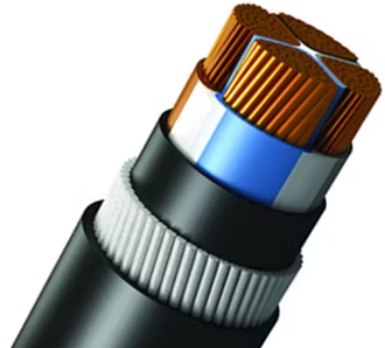
For industrial-grade high-rises or plant rooms, Steel Wire Armoured (SWA) cables with a flame-retardant LSZH sheath provide mechanical protection alongside fire safety.
- Standards: IEC 60332-3-22 Category A.
- Best For: Mechanical rooms and external risers.
The “Golden Thread” of Safety: Certification Matters
In the post-Grenfell era of building safety, “self-declaration” by manufacturers is no longer enough. To meet E-E-A-T (Experience, Expertise, Authoritativeness, and Trustworthiness) criteria for your building’s documentation:
- Look for Third-Party Approval: Ensure cables are certified by bodies like BASEC (British Approvals Service for Cables) or LPCB (Loss Prevention Certification Board).
- Check the CPR Rating: In Europe and the UK, the Construction Products Regulation (CPR) works alongside IEC standards. Aim for B2ca or Cca ratings for high-rise environments.
- Verify the Batch: Always cross-reference the cable’s sheath markings with the manufacturer’s datasheet and test certificates.
Final Thoughts: Investing in Seconds
When a fire breaks out in a 50-story building, every second of self-extinguishing behavior counts. By specifying cables that meet IEC 60332-3, you aren’t just following a code—you are ensuring that the building’s “nervous system” doesn’t become the path of destruction.
Whether you are designing a new luxury tower or retrofitting an older structure, always prioritize LSZH and Category A/C bundled testing.
