







Single Core Cables-2026 Comprehensive Blog

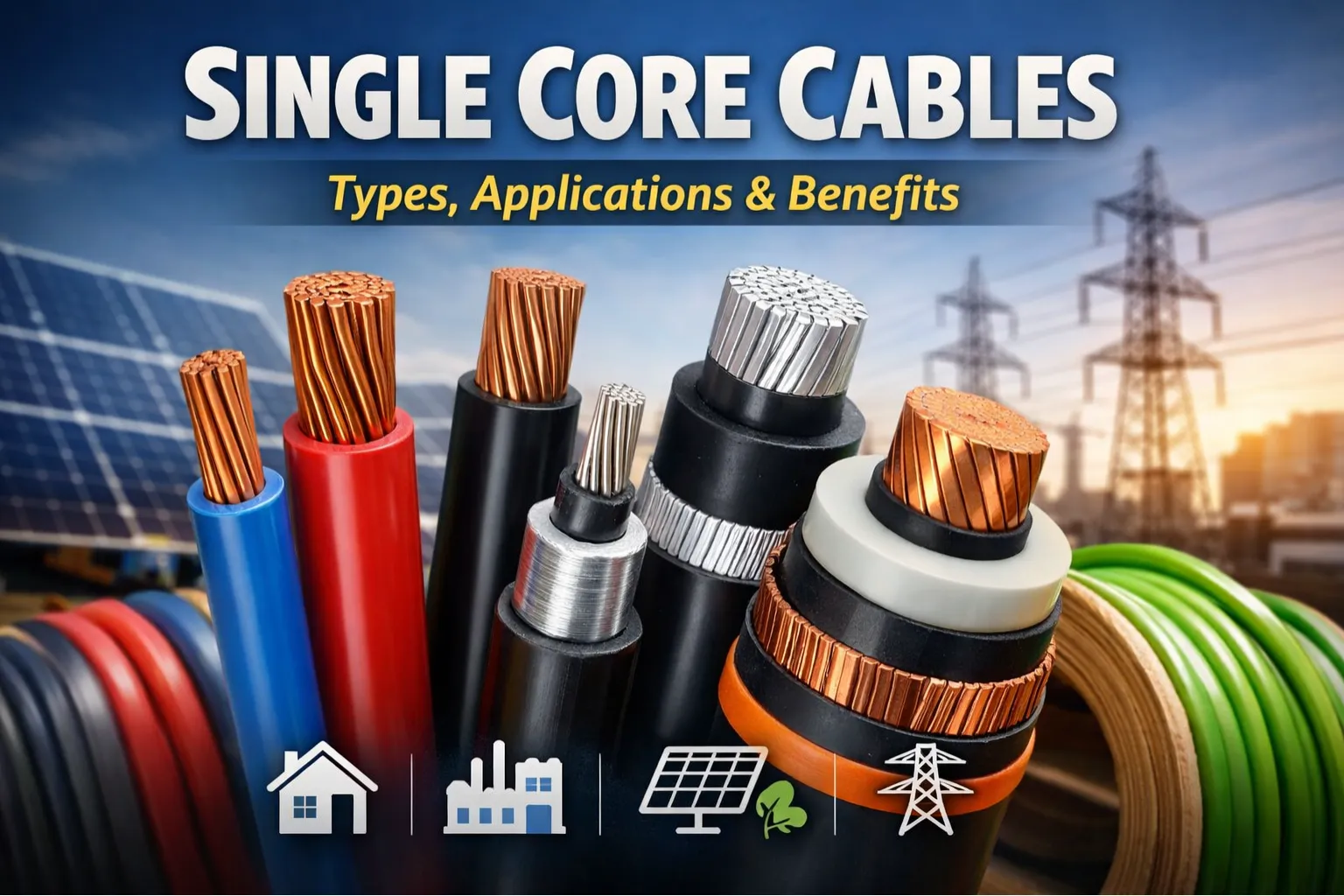
Single Core Cables: A Complete Guide to Uses, Types, and Benefits
Single core cables are one of the most widely used electrical cables in residential, commercial, and industrial electrical systems. Known for their simplicity, flexibility, and reliability, these cables play a crucial role in power transmission, control wiring, and earthing applications. Whether used in buildings, machinery, or renewable energy systems, single core cables offer efficient electrical performance and ease of installation.
What Are Single Core Cables?
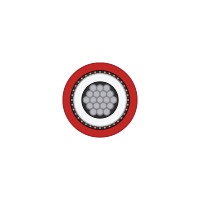
A single core cable consists of one electrical conductor insulated with a protective layer. Unlike multi-core cables, which contain multiple conductors within one sheath, single core cables carry current through a single path. These cables are usually installed in conduits, trunking, or cable trays, especially where flexibility in routing and heat dissipation is required.
Single core cables can be manufactured using copper or aluminum conductors and are available in various insulation materials depending on voltage levels and environmental conditions.
Construction of Single Core Cables
The basic construction of a single core cable includes:
- Conductor: Made of copper or aluminum, either solid or stranded
- Insulation: PVC, XLPE, rubber, or other polymer materials
- Optional Sheath: In some cases, an additional outer sheath for mechanical protection
The simple construction ensures lower electrical resistance, minimal power loss, and easy maintenance.
Types of Single Core Cables
Single core cables are classified based on conductor material, insulation type, and voltage rating.
1. Based on Conductor Material
- Copper Single Core Cables: Offer excellent conductivity, flexibility, and durability
- Aluminum Single Core Cables: Lightweight and cost-effective for large power distribution
2. Based on Insulation Type
- PVC Insulated Single Core Cables: Common for domestic and light commercial wiring
- XLPE Insulated Single Core Cables: Used in high-temperature and high-voltage applications
- Rubber Insulated Cables: Suitable for flexible and portable equipment
3. Based on Voltage Rating
- Low Voltage (LV) Single Core Cables: Up to 1kV
- Medium Voltage (MV) Single Core Cables: 1kV to 33kV
- High Voltage (HV) Single Core Cables: Above 33kV
Applications of Single Core Cables
Single core cables are used across a wide range of electrical systems, including:
- Residential wiring: Lighting circuits, switches, and sockets
- Commercial buildings: Power distribution and control panels
- Industrial installations: Motors, generators, and machinery
- Power plants: High-current transmission systems
- Renewable energy systems: Solar panels and wind turbines
- Earthing and grounding systems: Ensuring electrical safety
Their ability to handle high current loads makes them ideal for power transmission where multiple cables can be laid in parallel.
Advantages of Single Core Cables
Single core cables offer several benefits over multi-core alternatives:
1. Better Heat Dissipation
When installed separately, single core cables dissipate heat more efficiently, reducing the risk of overheating.
2. High Current Carrying Capacity
These cables can carry higher current, making them suitable for heavy-duty applications.
3. Easy Installation and Replacement
If one cable fails, it can be replaced individually without disturbing the entire system.
4. Cost Efficiency
For high-power installations, single core cables can be more economical due to lower insulation and manufacturing complexity.
5. Flexibility in System Design
Engineers can design customized layouts by routing individual cables according to load requirements.
Disadvantages of Single Core Cables
Despite their benefits, single core cables have some limitations:
- Require more space when multiple cables are used
- Need proper identification and color coding
- Not suitable for direct burial without additional protection
Understanding these limitations helps in selecting the right cable type for each project.
Factors to Consider When Choosing Single Core Cables
Before selecting a single core cable, consider the following factors:
- Current rating: Ensure the cable can handle the required load
- Voltage level: Match the insulation rating with system voltage
- Installation environment: Indoor, outdoor, or underground
- Temperature conditions: High-temperature areas require XLPE insulation
- Standards and certifications: IEC, BS, or local electrical standards
Choosing the correct cable improves safety, efficiency, and system longevity.
Single Core Cables vs Multi-Core Cables
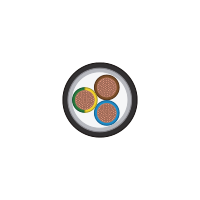
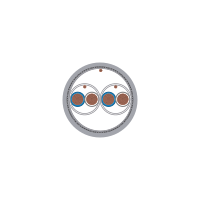
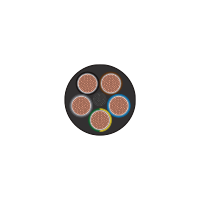
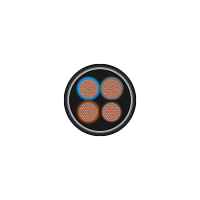
Single core cables are best for high-power and high-current applications, while multi-core cables are more suitable for compact control and signal wiring. Single core cables offer better cooling and scalability, whereas multi-core cables reduce space and simplify routing.
Conclusion
Single core cables are a fundamental component of modern electrical systems. Their simple construction, high current capacity, and flexibility make them ideal for residential, commercial, and industrial applications. By understanding their types, advantages, and proper selection criteria, engineers and electricians can ensure safe, efficient, and long-lasting electrical installations.
As power demands continue to grow, single core cables remain a reliable and cost-effective solution for efficient power transmission.
For such informative articles, click here Life Cables Blogs.
