






Overhead Conductor-2026 Comprehensive Blog

Types, Materials, Applications, and Advantages
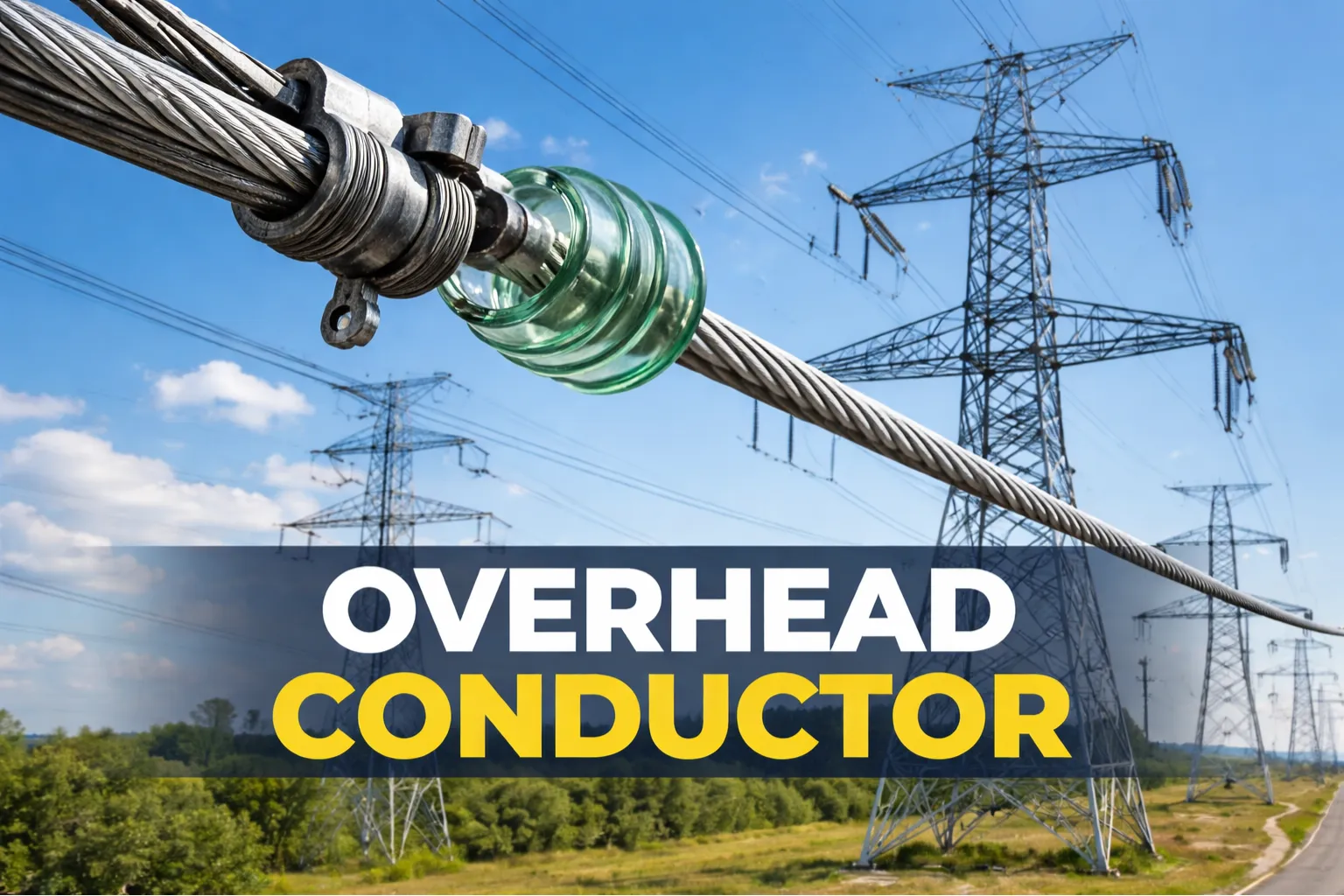
Overhead conductors are a critical component of electrical power transmission and distribution systems worldwide. From high-voltage transmission lines to local distribution networks, overhead conductors ensure the efficient and reliable flow of electricity over long distances. Their cost-effectiveness, ease of maintenance, and adaptability make them the most widely used conductors in power systems, especially in developing countries like Pakistan.
This blog explores what overhead conductors are, their types, materials, applications, and key advantages.
What Is an Overhead Conductor?
An overhead conductor is an electrical conductor installed above ground, supported by poles or transmission towers, and used to transmit or distribute electrical power. These conductors are typically bare (without insulation) and rely on air as the primary insulating medium.
Overhead conductors are designed to withstand mechanical stress, temperature variations, wind pressure, and environmental conditions while maintaining electrical efficiency and safety.
Materials Used in Overhead Conductors
The performance of an overhead conductor largely depends on the material used. The most common materials include:
1. Aluminium
Aluminium is the most widely used material due to its:
- Lightweight nature
- High electrical conductivity
- Resistance to corrosion
- Lower cost compared to copper
2. Copper
Copper conductors offer excellent conductivity but are less commonly used today because:
- They are heavier
- More expensive
- Prone to theft
3. Steel
Steel is used mainly as a reinforcement core to improve tensile strength rather than conductivity.
Types of Overhead Conductors
Different types of overhead conductors are used depending on voltage level, span length, and environmental conditions.
1. AAC (All Aluminium Conductor)
- Made entirely of aluminium strands
- High conductivity
- Low mechanical strength
- Suitable for short spans and urban distribution networks
2. ACSR (Aluminium Conductor Steel Reinforced)
- Aluminium strands wrapped around a steel core
- High tensile strength
- Ideal for long spans and high-voltage transmission lines
- Widely used in Pakistan’s power transmission systems
3. AAAC (All Aluminium Alloy Conductor)
- Made of aluminium-magnesium-silicon alloy
- Better strength-to-weight ratio than AAC
- Improved corrosion resistance
- Used in coastal and industrial areas
4. ACAR (Aluminium Conductor Alloy Reinforced)
- Combines aluminium alloy and pure aluminium
- Balanced conductivity and strength
- Used in special transmission applications
Applications of Overhead Conductors
Overhead conductors are used across various segments of the power system:
1. Power Transmission
High-voltage overhead conductors transmit electricity from power plants to substations over long distances efficiently.
2. Power Distribution
Medium and low-voltage overhead lines distribute electricity from substations to residential, commercial, and industrial consumers.
3. Rural Electrification
Due to their low installation cost and ease of expansion, overhead conductors are ideal for rural and remote areas.
4. Industrial Power Supply
Industries rely on overhead conductors for stable and high-capacity power transmission.
Advantages of Overhead Conductors
Overhead conductors offer several technical and economic benefits:
Cost-Effective Installation
Compared to underground cables, overhead conductors are significantly cheaper to install and maintain.
Easy Fault Detection and Repair
Faults in overhead lines are easier to locate and fix, reducing downtime and maintenance costs.
Efficient Heat Dissipation
Since they are exposed to air, overhead conductors dissipate heat more effectively, allowing higher current-carrying capacity.
Flexibility and Expandability
Overhead systems can be upgraded or extended with minimal disruption.
Disadvantages of Overhead Conductors
Despite their advantages, overhead conductors have some limitations:
- Vulnerable to weather conditions (storms, wind, ice)
- Visual impact on landscapes
- Higher risk of outages during extreme weather
- Safety concerns in densely populated areas
Key Design Considerations
When selecting an overhead conductor, engineers consider:
- Current-carrying capacity
- Mechanical strength
- Span length
- Environmental conditions
- Voltage level
- Line losses and sag
Proper conductor selection ensures long service life, safety, and efficient power delivery.
Overhead Conductors in Pakistan
In Pakistan, overhead conductors are extensively used by utilities such as WAPDA, NTDC, and DISCOs. ACSR and AAAC conductors dominate the transmission and distribution networks due to their durability and cost efficiency. With increasing demand for electricity and grid modernisation, advanced overhead conductors are playing a vital role in strengthening the national power infrastructure.
Conclusion
Overhead conductors remain the backbone of modern electrical power systems. Their affordability, reliability, and adaptability make them indispensable for power transmission and distribution. Understanding the types, materials, and applications of overhead conductors helps engineers, contractors, and policymakers make informed decisions for efficient and sustainable power networks.
As energy demand continues to grow, the development and optimisation of overhead conductors will remain essential for reliable electricity supply worldwide.
